
Get trending papers in your email inbox once a day!
Get trending papers in your email inbox!
Subscribe

Tuning computer vision models with task rewards
Misalignment between model predictions and intended usage can be detrimental for the deployment of computer vision models. The issue is exacerbated when the task involves complex structured outputs, as it becomes harder to design procedures which address this misalignment. In natural language processing, this is often addressed using reinforcement learning techniques that align models with a task reward. We adopt this approach and show its surprising effectiveness across multiple computer vision tasks, such as object detection, panoptic segmentation, colorization and image captioning. We believe this approach has the potential to be widely useful for better aligning models with a diverse range of computer vision tasks.

Adaptive Testing of Computer Vision Models
Vision models often fail systematically on groups of data that share common semantic characteristics (e.g., rare objects or unusual scenes), but identifying these failure modes is a challenge. We introduce AdaVision, an interactive process for testing vision models which helps users identify and fix coherent failure modes. Given a natural language description of a coherent group, AdaVision retrieves relevant images from LAION-5B with CLIP. The user then labels a small amount of data for model correctness, which is used in successive retrieval rounds to hill-climb towards high-error regions, refining the group definition. Once a group is saturated, AdaVision uses GPT-3 to suggest new group descriptions for the user to explore. We demonstrate the usefulness and generality of AdaVision in user studies, where users find major bugs in state-of-the-art classification, object detection, and image captioning models. These user-discovered groups have failure rates 2-3x higher than those surfaced by automatic error clustering methods. Finally, finetuning on examples found with AdaVision fixes the discovered bugs when evaluated on unseen examples, without degrading in-distribution accuracy, and while also improving performance on out-of-distribution datasets.
Cross-Domain Foundation Model Adaptation: Pioneering Computer Vision Models for Geophysical Data Analysis
We explore adapting foundation models (FMs) from the computer vision domain to geoscience. FMs, large neural networks trained on massive datasets, excel in diverse tasks with remarkable adaptability and generality. However, geoscience faces challenges like lacking curated training datasets and high computational costs for developing specialized FMs. This study considers adapting FMs from computer vision to geoscience, analyzing their scale, adaptability, and generality for geoscientific data analysis. We introduce a workflow that leverages existing computer vision FMs, fine-tuning them for geoscientific tasks, reducing development costs while enhancing accuracy. Through experiments, we demonstrate this workflow's effectiveness in broad applications to process and interpret geoscientific data of lunar images, seismic data, DAS arrays and so on. Our findings introduce advanced ML techniques to geoscience, proving the feasibility and advantages of cross-domain FMs adaptation, driving further advancements in geoscientific data analysis and offering valuable insights for FMs applications in other scientific domains.
Disentangling the Factors of Convergence between Brains and Computer Vision Models
Many AI models trained on natural images develop representations that resemble those of the human brain. However, the factors that drive this brain-model similarity remain poorly understood. To disentangle how the model, training and data independently lead a neural network to develop brain-like representations, we trained a family of self-supervised vision transformers (DINOv3) that systematically varied these different factors. We compare their representations of images to those of the human brain recorded with both fMRI and MEG, providing high resolution in spatial and temporal analyses. We assess the brain-model similarity with three complementary metrics focusing on overall representational similarity, topographical organization, and temporal dynamics. We show that all three factors - model size, training amount, and image type - independently and interactively impact each of these brain similarity metrics. In particular, the largest DINOv3 models trained with the most human-centric images reach the highest brain-similarity. This emergence of brain-like representations in AI models follows a specific chronology during training: models first align with the early representations of the sensory cortices, and only align with the late and prefrontal representations of the brain with considerably more training. Finally, this developmental trajectory is indexed by both structural and functional properties of the human cortex: the representations that are acquired last by the models specifically align with the cortical areas with the largest developmental expansion, thickness, least myelination, and slowest timescales. Overall, these findings disentangle the interplay between architecture and experience in shaping how artificial neural networks come to see the world as humans do, thus offering a promising framework to understand how the human brain comes to represent its visual world.
FACET: Fairness in Computer Vision Evaluation Benchmark
Computer vision models have known performance disparities across attributes such as gender and skin tone. This means during tasks such as classification and detection, model performance differs for certain classes based on the demographics of the people in the image. These disparities have been shown to exist, but until now there has not been a unified approach to measure these differences for common use-cases of computer vision models. We present a new benchmark named FACET (FAirness in Computer Vision EvaluaTion), a large, publicly available evaluation set of 32k images for some of the most common vision tasks - image classification, object detection and segmentation. For every image in FACET, we hired expert reviewers to manually annotate person-related attributes such as perceived skin tone and hair type, manually draw bounding boxes and label fine-grained person-related classes such as disk jockey or guitarist. In addition, we use FACET to benchmark state-of-the-art vision models and present a deeper understanding of potential performance disparities and challenges across sensitive demographic attributes. With the exhaustive annotations collected, we probe models using single demographics attributes as well as multiple attributes using an intersectional approach (e.g. hair color and perceived skin tone). Our results show that classification, detection, segmentation, and visual grounding models exhibit performance disparities across demographic attributes and intersections of attributes. These harms suggest that not all people represented in datasets receive fair and equitable treatment in these vision tasks. We hope current and future results using our benchmark will contribute to fairer, more robust vision models. FACET is available publicly at https://facet.metademolab.com/




VFA: Vision Frequency Analysis of Foundation Models and Human
Machine learning models often struggle with distribution shifts in real-world scenarios, whereas humans exhibit robust adaptation. Models that better align with human perception may achieve higher out-of-distribution generalization. In this study, we investigate how various characteristics of large-scale computer vision models influence their alignment with human capabilities and robustness. Our findings indicate that increasing model and data size and incorporating rich semantic information and multiple modalities enhance models' alignment with human perception and their overall robustness. Our empirical analysis demonstrates a strong correlation between out-of-distribution accuracy and human alignment.

Peer-Ranked Precision: Creating a Foundational Dataset for Fine-Tuning Vision Models from DataSeeds' Annotated Imagery
The development of modern Artificial Intelligence (AI) models, particularly diffusion-based models employed in computer vision and image generation tasks, is undergoing a paradigmatic shift in development methodologies. Traditionally dominated by a "Model Centric" approach, in which performance gains were primarily pursued through increasingly complex model architectures and hyperparameter optimization, the field is now recognizing a more nuanced "Data-Centric" approach. This emergent framework foregrounds the quality, structure, and relevance of training data as the principal driver of model performance. To operationalize this paradigm shift, we introduce the DataSeeds.AI sample dataset (the "DSD"), initially comprised of approximately 10,610 high-quality human peer-ranked photography images accompanied by extensive multi-tier annotations. The DSD is a foundational computer vision dataset designed to usher in a new standard for commercial image datasets. Representing a small fraction of DataSeed.AI's 100 million-plus image catalog, the DSD provides a scalable foundation necessary for robust commercial and multimodal AI development. Through this in-depth exploratory analysis, we document the quantitative improvements generated by the DSD on specific models against known benchmarks and make the code and the trained models used in our evaluation publicly available.



DAViD: Data-efficient and Accurate Vision Models from Synthetic Data
The state of the art in human-centric computer vision achieves high accuracy and robustness across a diverse range of tasks. The most effective models in this domain have billions of parameters, thus requiring extremely large datasets, expensive training regimes, and compute-intensive inference. In this paper, we demonstrate that it is possible to train models on much smaller but high-fidelity synthetic datasets, with no loss in accuracy and higher efficiency. Using synthetic training data provides us with excellent levels of detail and perfect labels, while providing strong guarantees for data provenance, usage rights, and user consent. Procedural data synthesis also provides us with explicit control on data diversity, that we can use to address unfairness in the models we train. Extensive quantitative assessment on real input images demonstrates accuracy of our models on three dense prediction tasks: depth estimation, surface normal estimation, and soft foreground segmentation. Our models require only a fraction of the cost of training and inference when compared with foundational models of similar accuracy. Our human-centric synthetic dataset and trained models are available at https://aka.ms/DAViD.

Adaptive Camera Sensor for Vision Models
Domain shift remains a persistent challenge in deep-learning-based computer vision, often requiring extensive model modifications or large labeled datasets to address. Inspired by human visual perception, which adjusts input quality through corrective lenses rather than over-training the brain, we propose Lens, a novel camera sensor control method that enhances model performance by capturing high-quality images from the model's perspective rather than relying on traditional human-centric sensor control. Lens is lightweight and adapts sensor parameters to specific models and scenes in real-time. At its core, Lens utilizes VisiT, a training-free, model-specific quality indicator that evaluates individual unlabeled samples at test time using confidence scores without additional adaptation costs. To validate Lens, we introduce ImageNet-ES Diverse, a new benchmark dataset capturing natural perturbations from varying sensor and lighting conditions. Extensive experiments on both ImageNet-ES and our new ImageNet-ES Diverse show that Lens significantly improves model accuracy across various baseline schemes for sensor control and model modification while maintaining low latency in image captures. Lens effectively compensates for large model size differences and integrates synergistically with model improvement techniques. Our code and dataset are available at github.com/Edw2n/Lens.git.
Review of Large Vision Models and Visual Prompt Engineering
Visual prompt engineering is a fundamental technology in the field of visual and image Artificial General Intelligence, serving as a key component for achieving zero-shot capabilities. As the development of large vision models progresses, the importance of prompt engineering becomes increasingly evident. Designing suitable prompts for specific visual tasks has emerged as a meaningful research direction. This review aims to summarize the methods employed in the computer vision domain for large vision models and visual prompt engineering, exploring the latest advancements in visual prompt engineering. We present influential large models in the visual domain and a range of prompt engineering methods employed on these models. It is our hope that this review provides a comprehensive and systematic description of prompt engineering methods based on large visual models, offering valuable insights for future researchers in their exploration of this field.
COMCAT: Towards Efficient Compression and Customization of Attention-Based Vision Models
Attention-based vision models, such as Vision Transformer (ViT) and its variants, have shown promising performance in various computer vision tasks. However, these emerging architectures suffer from large model sizes and high computational costs, calling for efficient model compression solutions. To date, pruning ViTs has been well studied, while other compression strategies that have been widely applied in CNN compression, e.g., model factorization, is little explored in the context of ViT compression. This paper explores an efficient method for compressing vision transformers to enrich the toolset for obtaining compact attention-based vision models. Based on the new insight on the multi-head attention layer, we develop a highly efficient ViT compression solution, which outperforms the state-of-the-art pruning methods. For compressing DeiT-small and DeiT-base models on ImageNet, our proposed approach can achieve 0.45% and 0.76% higher top-1 accuracy even with fewer parameters. Our finding can also be applied to improve the customization efficiency of text-to-image diffusion models, with much faster training (up to 2.6times speedup) and lower extra storage cost (up to 1927.5times reduction) than the existing works.


A Study of Autoregressive Decoders for Multi-Tasking in Computer Vision
There has been a recent explosion of computer vision models which perform many tasks and are composed of an image encoder (usually a ViT) and an autoregressive decoder (usually a Transformer). However, most of this work simply presents one system and its results, leaving many questions regarding design decisions and trade-offs of such systems unanswered. In this work, we aim to provide such answers. We take a close look at autoregressive decoders for multi-task learning in multimodal computer vision, including classification, captioning, visual question answering, and optical character recognition. Through extensive systematic experiments, we study the effects of task and data mixture, training and regularization hyperparameters, conditioning type and specificity, modality combination, and more. Importantly, we compare these to well-tuned single-task baselines to highlight the cost incurred by multi-tasking. A key finding is that a small decoder learned on top of a frozen pretrained encoder works surprisingly well. We call this setup locked-image tuning with decoder (LiT-decoder). It can be seen as teaching a decoder to interact with a pretrained vision model via natural language.
Florence: A New Foundation Model for Computer Vision
Automated visual understanding of our diverse and open world demands computer vision models to generalize well with minimal customization for specific tasks, similar to human vision. Computer vision foundation models, which are trained on diverse, large-scale dataset and can be adapted to a wide range of downstream tasks, are critical for this mission to solve real-world computer vision applications. While existing vision foundation models such as CLIP, ALIGN, and Wu Dao 2.0 focus mainly on mapping images and textual representations to a cross-modal shared representation, we introduce a new computer vision foundation model, Florence, to expand the representations from coarse (scene) to fine (object), from static (images) to dynamic (videos), and from RGB to multiple modalities (caption, depth). By incorporating universal visual-language representations from Web-scale image-text data, our Florence model can be easily adapted for various computer vision tasks, such as classification, retrieval, object detection, VQA, image caption, video retrieval and action recognition. Moreover, Florence demonstrates outstanding performance in many types of transfer learning: fully sampled fine-tuning, linear probing, few-shot transfer and zero-shot transfer for novel images and objects. All of these properties are critical for our vision foundation model to serve general purpose vision tasks. Florence achieves new state-of-the-art results in majority of 44 representative benchmarks, e.g., ImageNet-1K zero-shot classification with top-1 accuracy of 83.74 and the top-5 accuracy of 97.18, 62.4 mAP on COCO fine tuning, 80.36 on VQA, and 87.8 on Kinetics-600.


A Survey on Dynamic Neural Networks: from Computer Vision to Multi-modal Sensor Fusion
Model compression is essential in the deployment of large Computer Vision models on embedded devices. However, static optimization techniques (e.g. pruning, quantization, etc.) neglect the fact that different inputs have different complexities, thus requiring different amount of computations. Dynamic Neural Networks allow to condition the number of computations to the specific input. The current literature on the topic is very extensive and fragmented. We present a comprehensive survey that synthesizes and unifies existing Dynamic Neural Networks research in the context of Computer Vision. Additionally, we provide a logical taxonomy based on which component of the network is adaptive: the output, the computation graph or the input. Furthermore, we argue that Dynamic Neural Networks are particularly beneficial in the context of Sensor Fusion for better adaptivity, noise reduction and information prioritization. We present preliminary works in this direction. We complement this survey with a curated repository listing all the surveyed papers, each with a brief summary of the solution and the code base when available: https://github.com/DTU-PAS/awesome-dynn-for-cv .

MNIST-C: A Robustness Benchmark for Computer Vision
We introduce the MNIST-C dataset, a comprehensive suite of 15 corruptions applied to the MNIST test set, for benchmarking out-of-distribution robustness in computer vision. Through several experiments and visualizations we demonstrate that our corruptions significantly degrade performance of state-of-the-art computer vision models while preserving the semantic content of the test images. In contrast to the popular notion of adversarial robustness, our model-agnostic corruptions do not seek worst-case performance but are instead designed to be broad and diverse, capturing multiple failure modes of modern models. In fact, we find that several previously published adversarial defenses significantly degrade robustness as measured by MNIST-C. We hope that our benchmark serves as a useful tool for future work in designing systems that are able to learn robust feature representations that capture the underlying semantics of the input.
The Unsurprising Effectiveness of Pre-Trained Vision Models for Control
Recent years have seen the emergence of pre-trained representations as a powerful abstraction for AI applications in computer vision, natural language, and speech. However, policy learning for control is still dominated by a tabula-rasa learning paradigm, with visuo-motor policies often trained from scratch using data from deployment environments. In this context, we revisit and study the role of pre-trained visual representations for control, and in particular representations trained on large-scale computer vision datasets. Through extensive empirical evaluation in diverse control domains (Habitat, DeepMind Control, Adroit, Franka Kitchen), we isolate and study the importance of different representation training methods, data augmentations, and feature hierarchies. Overall, we find that pre-trained visual representations can be competitive or even better than ground-truth state representations to train control policies. This is in spite of using only out-of-domain data from standard vision datasets, without any in-domain data from the deployment environments. Source code and more at https://sites.google.com/view/pvr-control.
MoAI: Mixture of All Intelligence for Large Language and Vision Models
The rise of large language models (LLMs) and instruction tuning has led to the current trend of instruction-tuned large language and vision models (LLVMs). This trend involves either meticulously curating numerous instruction tuning datasets tailored to specific objectives or enlarging LLVMs to manage vast amounts of vision language (VL) data. However, current LLVMs have disregarded the detailed and comprehensive real-world scene understanding available from specialized computer vision (CV) models in visual perception tasks such as segmentation, detection, scene graph generation (SGG), and optical character recognition (OCR). Instead, the existing LLVMs rely mainly on the large capacity and emergent capabilities of their LLM backbones. Therefore, we present a new LLVM, Mixture of All Intelligence (MoAI), which leverages auxiliary visual information obtained from the outputs of external segmentation, detection, SGG, and OCR models. MoAI operates through two newly introduced modules: MoAI-Compressor and MoAI-Mixer. After verbalizing the outputs of the external CV models, the MoAI-Compressor aligns and condenses them to efficiently use relevant auxiliary visual information for VL tasks. MoAI-Mixer then blends three types of intelligence (1) visual features, (2) auxiliary features from the external CV models, and (3) language features by utilizing the concept of Mixture of Experts. Through this integration, MoAI significantly outperforms both open-source and closed-source LLVMs in numerous zero-shot VL tasks, particularly those related to real-world scene understanding such as object existence, positions, relations, and OCR without enlarging the model size or curating extra visual instruction tuning datasets.




Full-Cycle Energy Consumption Benchmark for Low-Carbon Computer Vision
The energy consumption of deep learning models is increasing at a breathtaking rate, which raises concerns due to potential negative effects on carbon neutrality in the context of global warming and climate change. With the progress of efficient deep learning techniques, e.g., model compression, researchers can obtain efficient models with fewer parameters and smaller latency. However, most of the existing efficient deep learning methods do not explicitly consider energy consumption as a key performance indicator. Furthermore, existing methods mostly focus on the inference costs of the resulting efficient models, but neglect the notable energy consumption throughout the entire life cycle of the algorithm. In this paper, we present the first large-scale energy consumption benchmark for efficient computer vision models, where a new metric is proposed to explicitly evaluate the full-cycle energy consumption under different model usage intensity. The benchmark can provide insights for low carbon emission when selecting efficient deep learning algorithms in different model usage scenarios.

Meteor: Mamba-based Traversal of Rationale for Large Language and Vision Models
The rapid development of large language and vision models (LLVMs) has been driven by advances in visual instruction tuning. Recently, open-source LLVMs have curated high-quality visual instruction tuning datasets and utilized additional vision encoders or multiple computer vision models in order to narrow the performance gap with powerful closed-source LLVMs. These advancements are attributed to multifaceted information required for diverse capabilities, including fundamental image understanding, real-world knowledge about common-sense and non-object concepts (e.g., charts, diagrams, symbols, signs, and math problems), and step-by-step procedures for solving complex questions. Drawing from the multifaceted information, we present a new efficient LLVM, Mamba-based traversal of rationales (Meteor), which leverages multifaceted rationale to enhance understanding and answering capabilities. To embed lengthy rationales containing abundant information, we employ the Mamba architecture, capable of processing sequential data with linear time complexity. We introduce a new concept of traversal of rationale that facilitates efficient embedding of rationale. Subsequently, the backbone multimodal language model (MLM) is trained to generate answers with the aid of rationale. Through these steps, Meteor achieves significant improvements in vision language performances across multiple evaluation benchmarks requiring diverse capabilities, without scaling up the model size or employing additional vision encoders and computer vision models.
VisionGPT-3D: A Generalized Multimodal Agent for Enhanced 3D Vision Understanding
The evolution of text to visual components facilitates people's daily lives, such as generating image, videos from text and identifying the desired elements within the images. Computer vision models involving the multimodal abilities in the previous days are focused on image detection, classification based on well-defined objects. Large language models (LLMs) introduces the transformation from nature language to visual objects, which present the visual layout for text contexts. OpenAI GPT-4 has emerged as the pinnacle in LLMs, while the computer vision (CV) domain boasts a plethora of state-of-the-art (SOTA) models and algorithms to convert 2D images to their 3D representations. However, the mismatching between the algorithms with the problem could lead to undesired results. In response to this challenge, we propose an unified VisionGPT-3D framework to consolidate the state-of-the-art vision models, thereby facilitating the development of vision-oriented AI. VisionGPT-3D provides a versatile multimodal framework building upon the strengths of multimodal foundation models. It seamlessly integrates various SOTA vision models and brings the automation in the selection of SOTA vision models, identifies the suitable 3D mesh creation algorithms corresponding to 2D depth maps analysis, generates optimal results based on diverse multimodal inputs such as text prompts. Keywords: VisionGPT-3D, 3D vision understanding, Multimodal agent

BEHAVIOR Vision Suite: Customizable Dataset Generation via Simulation
The systematic evaluation and understanding of computer vision models under varying conditions require large amounts of data with comprehensive and customized labels, which real-world vision datasets rarely satisfy. While current synthetic data generators offer a promising alternative, particularly for embodied AI tasks, they often fall short for computer vision tasks due to low asset and rendering quality, limited diversity, and unrealistic physical properties. We introduce the BEHAVIOR Vision Suite (BVS), a set of tools and assets to generate fully customized synthetic data for systematic evaluation of computer vision models, based on the newly developed embodied AI benchmark, BEHAVIOR-1K. BVS supports a large number of adjustable parameters at the scene level (e.g., lighting, object placement), the object level (e.g., joint configuration, attributes such as "filled" and "folded"), and the camera level (e.g., field of view, focal length). Researchers can arbitrarily vary these parameters during data generation to perform controlled experiments. We showcase three example application scenarios: systematically evaluating the robustness of models across different continuous axes of domain shift, evaluating scene understanding models on the same set of images, and training and evaluating simulation-to-real transfer for a novel vision task: unary and binary state prediction. Project website: https://behavior-vision-suite.github.io/


Parameter-efficient Model Adaptation for Vision Transformers
In computer vision, it has achieved great transfer learning performance via adapting large-scale pretrained vision models (e.g., vision transformers) to downstream tasks. Common approaches for model adaptation either update all model parameters or leverage linear probes. In this paper, we aim to study parameter-efficient model adaptation strategies for vision transformers on the image classification task. We formulate efficient model adaptation as a subspace training problem and perform a comprehensive benchmarking over different efficient adaptation methods. We conduct an empirical study on each efficient model adaptation method focusing on its performance alongside parameter cost. Furthermore, we propose a parameter-efficient model adaptation framework, which first selects submodules by measuring local intrinsic dimensions and then projects them into subspace for further decomposition via a novel Kronecker Adaptation (KAdaptation) method. We analyze and compare our method with a diverse set of baseline model adaptation methods (including state-of-the-art methods for pretrained language models). Our method performs the best in terms of the tradeoff between accuracy and parameter efficiency across 20 image classification datasets under the few-shot setting and 7 image classification datasets under the full-shot setting.

A Dataset for Crucial Object Recognition in Blind and Low-Vision Individuals' Navigation
This paper introduces a dataset for improving real-time object recognition systems to aid blind and low-vision (BLV) individuals in navigation tasks. The dataset comprises 21 videos of BLV individuals navigating outdoor spaces, and a taxonomy of 90 objects crucial for BLV navigation, refined through a focus group study. We also provide object labeling for the 90 objects across 31 video segments created from the 21 videos. A deeper analysis reveals that most contemporary datasets used in training computer vision models contain only a small subset of the taxonomy in our dataset. Preliminary evaluation of state-of-the-art computer vision models on our dataset highlights shortcomings in accurately detecting key objects relevant to BLV navigation, emphasizing the need for specialized datasets. We make our dataset publicly available, offering valuable resources for developing more inclusive navigation systems for BLV individuals.
From Pixels to Predictions: Spectrogram and Vision Transformer for Better Time Series Forecasting
Time series forecasting plays a crucial role in decision-making across various domains, but it presents significant challenges. Recent studies have explored image-driven approaches using computer vision models to address these challenges, often employing lineplots as the visual representation of time series data. In this paper, we propose a novel approach that uses time-frequency spectrograms as the visual representation of time series data. We introduce the use of a vision transformer for multimodal learning, showcasing the advantages of our approach across diverse datasets from different domains. To evaluate its effectiveness, we compare our method against statistical baselines (EMA and ARIMA), a state-of-the-art deep learning-based approach (DeepAR), other visual representations of time series data (lineplot images), and an ablation study on using only the time series as input. Our experiments demonstrate the benefits of utilizing spectrograms as a visual representation for time series data, along with the advantages of employing a vision transformer for simultaneous learning in both the time and frequency domains.



Adaptive Autonomy in Human-on-the-Loop Vision-Based Robotics Systems
Computer vision approaches are widely used by autonomous robotic systems to sense the world around them and to guide their decision making as they perform diverse tasks such as collision avoidance, search and rescue, and object manipulation. High accuracy is critical, particularly for Human-on-the-loop (HoTL) systems where decisions are made autonomously by the system, and humans play only a supervisory role. Failures of the vision model can lead to erroneous decisions with potentially life or death consequences. In this paper, we propose a solution based upon adaptive autonomy levels, whereby the system detects loss of reliability of these models and responds by temporarily lowering its own autonomy levels and increasing engagement of the human in the decision-making process. Our solution is applicable for vision-based tasks in which humans have time to react and provide guidance. When implemented, our approach would estimate the reliability of the vision task by considering uncertainty in its model, and by performing covariate analysis to determine when the current operating environment is ill-matched to the model's training data. We provide examples from DroneResponse, in which small Unmanned Aerial Systems are deployed for Emergency Response missions, and show how the vision model's reliability would be used in addition to confidence scores to drive and specify the behavior and adaptation of the system's autonomy. This workshop paper outlines our proposed approach and describes open challenges at the intersection of Computer Vision and Software Engineering for the safe and reliable deployment of vision models in the decision making of autonomous systems.
Outline-Guided Object Inpainting with Diffusion Models
Instance segmentation datasets play a crucial role in training accurate and robust computer vision models. However, obtaining accurate mask annotations to produce high-quality segmentation datasets is a costly and labor-intensive process. In this work, we show how this issue can be mitigated by starting with small annotated instance segmentation datasets and augmenting them to effectively obtain a sizeable annotated dataset. We achieve that by creating variations of the available annotated object instances in a way that preserves the provided mask annotations, thereby resulting in new image-mask pairs to be added to the set of annotated images. Specifically, we generate new images using a diffusion-based inpainting model to fill out the masked area with a desired object class by guiding the diffusion through the object outline. We show that the object outline provides a simple, but also reliable and convenient training-free guidance signal for the underlying inpainting model that is often sufficient to fill out the mask with an object of the correct class without further text guidance and preserve the correspondence between generated images and the mask annotations with high precision. Our experimental results reveal that our method successfully generates realistic variations of object instances, preserving their shape characteristics while introducing diversity within the augmented area. We also show that the proposed method can naturally be combined with text guidance and other image augmentation techniques.

ViR: Vision Retention Networks
Vision Transformers (ViTs) have attracted a lot of popularity in recent years, due to their exceptional capabilities in modeling long-range spatial dependencies and scalability for large scale training. Although the training parallelism of self-attention mechanism plays an important role in retaining great performance, its quadratic complexity baffles the application of ViTs in many scenarios which demand fast inference. This effect is even more pronounced in applications in which autoregressive modeling of input features is required. In Natural Language Processing (NLP), a new stream of efforts have proposed parallelizable models with recurrent formulation that allows for efficient inference in generative applications. Inspired by this trend, we propose a new class of computer vision models, dubbed Vision Retention Networks (ViR), with dual parallel and recurrent formulations, which strike an optimal balance between fast inference and parallel training with competitive performance. In particular, ViR scales favorably for image throughput and memory consumption in tasks that require higher-resolution images due to its flexible formulation in processing large sequence lengths. The ViR is the first attempt to realize dual parallel and recurrent equivalency in a general vision backbone for recognition tasks. We have validated the effectiveness of ViR through extensive experiments with different dataset sizes and various image resolutions and achieved competitive performance. Our code and pretrained models will be made publicly available.


Multiscale Deep Equilibrium Models
We propose a new class of implicit networks, the multiscale deep equilibrium model (MDEQ), suited to large-scale and highly hierarchical pattern recognition domains. An MDEQ directly solves for and backpropagates through the equilibrium points of multiple feature resolutions simultaneously, using implicit differentiation to avoid storing intermediate states (and thus requiring only O(1) memory consumption). These simultaneously-learned multi-resolution features allow us to train a single model on a diverse set of tasks and loss functions, such as using a single MDEQ to perform both image classification and semantic segmentation. We illustrate the effectiveness of this approach on two large-scale vision tasks: ImageNet classification and semantic segmentation on high-resolution images from the Cityscapes dataset. In both settings, MDEQs are able to match or exceed the performance of recent competitive computer vision models: the first time such performance and scale have been achieved by an implicit deep learning approach. The code and pre-trained models are at https://github.com/locuslab/mdeq .
UnifiedVisionGPT: Streamlining Vision-Oriented AI through Generalized Multimodal Framework
In the current landscape of artificial intelligence, foundation models serve as the bedrock for advancements in both language and vision domains. OpenAI GPT-4 has emerged as the pinnacle in large language models (LLMs), while the computer vision (CV) domain boasts a plethora of state-of-the-art (SOTA) models such as Meta's SAM and DINO, and YOLOS. However, the financial and computational burdens of training new models from scratch remain a significant barrier to progress. In response to this challenge, we introduce UnifiedVisionGPT, a novel framework designed to consolidate and automate the integration of SOTA vision models, thereby facilitating the development of vision-oriented AI. UnifiedVisionGPT distinguishes itself through four key features: (1) provides a versatile multimodal framework adaptable to a wide range of applications, building upon the strengths of multimodal foundation models; (2) seamlessly integrates various SOTA vision models to create a comprehensive multimodal platform, capitalizing on the best components of each model; (3) prioritizes vision-oriented AI, ensuring a more rapid progression in the CV domain compared to the current trajectory of LLMs; and (4) introduces automation in the selection of SOTA vision models, generating optimal results based on diverse multimodal inputs such as text prompts and images. This paper outlines the architecture and capabilities of UnifiedVisionGPT, demonstrating its potential to revolutionize the field of computer vision through enhanced efficiency, versatility, generalization, and performance. Our implementation, along with the unified multimodal framework and comprehensive dataset, is made publicly available at https://github.com/LHBuilder/SA-Segment-Anything.
Will Large-scale Generative Models Corrupt Future Datasets?
Recently proposed large-scale text-to-image generative models such as DALLcdotE 2, Midjourney, and StableDiffusion can generate high-quality and realistic images from users' prompts. Not limited to the research community, ordinary Internet users enjoy these generative models, and consequently, a tremendous amount of generated images have been shared on the Internet. Meanwhile, today's success of deep learning in the computer vision field owes a lot to images collected from the Internet. These trends lead us to a research question: "will such generated images impact the quality of future datasets and the performance of computer vision models positively or negatively?" This paper empirically answers this question by simulating contamination. Namely, we generate ImageNet-scale and COCO-scale datasets using a state-of-the-art generative model and evaluate models trained with "contaminated" datasets on various tasks, including image classification and image generation. Throughout experiments, we conclude that generated images negatively affect downstream performance, while the significance depends on tasks and the amount of generated images. The generated datasets and the codes for experiments will be publicly released for future research. Generated datasets and source codes are available from https://github.com/moskomule/dataset-contamination.

Interpret Vision Transformers as ConvNets with Dynamic Convolutions
There has been a debate about the superiority between vision Transformers and ConvNets, serving as the backbone of computer vision models. Although they are usually considered as two completely different architectures, in this paper, we interpret vision Transformers as ConvNets with dynamic convolutions, which enables us to characterize existing Transformers and dynamic ConvNets in a unified framework and compare their design choices side by side. In addition, our interpretation can also guide the network design as researchers now can consider vision Transformers from the design space of ConvNets and vice versa. We demonstrate such potential through two specific studies. First, we inspect the role of softmax in vision Transformers as the activation function and find it can be replaced by commonly used ConvNets modules, such as ReLU and Layer Normalization, which results in a faster convergence rate and better performance. Second, following the design of depth-wise convolution, we create a corresponding depth-wise vision Transformer that is more efficient with comparable performance. The potential of the proposed unified interpretation is not limited to the given examples and we hope it can inspire the community and give rise to more advanced network architectures.

Patch n' Pack: NaViT, a Vision Transformer for any Aspect Ratio and Resolution
The ubiquitous and demonstrably suboptimal choice of resizing images to a fixed resolution before processing them with computer vision models has not yet been successfully challenged. However, models such as the Vision Transformer (ViT) offer flexible sequence-based modeling, and hence varying input sequence lengths. We take advantage of this with NaViT (Native Resolution ViT) which uses sequence packing during training to process inputs of arbitrary resolutions and aspect ratios. Alongside flexible model usage, we demonstrate improved training efficiency for large-scale supervised and contrastive image-text pretraining. NaViT can be efficiently transferred to standard tasks such as image and video classification, object detection, and semantic segmentation and leads to improved results on robustness and fairness benchmarks. At inference time, the input resolution flexibility can be used to smoothly navigate the test-time cost-performance trade-off. We believe that NaViT marks a departure from the standard, CNN-designed, input and modelling pipeline used by most computer vision models, and represents a promising direction for ViTs.




BLINK: Multimodal Large Language Models Can See but Not Perceive
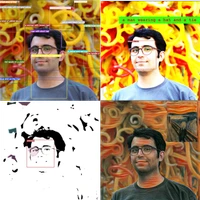
We introduce Blink, a new benchmark for multimodal language models (LLMs) that focuses on core visual perception abilities not found in other evaluations. Most of the Blink tasks can be solved by humans "within a blink" (e.g., relative depth estimation, visual correspondence, forensics detection, and multi-view reasoning). However, we find these perception-demanding tasks cast significant challenges for current multimodal LLMs because they resist mediation through natural language. Blink reformats 14 classic computer vision tasks into 3,807 multiple-choice questions, paired with single or multiple images and visual prompting. While humans get 95.70% accuracy on average, Blink is surprisingly challenging for existing multimodal LLMs: even the best-performing GPT-4V and Gemini achieve accuracies of 51.26% and 45.72%, only 13.17% and 7.63% higher than random guessing, indicating that such perception abilities have not "emerged" yet in recent multimodal LLMs. Our analysis also highlights that specialist CV models could solve these problems much better, suggesting potential pathways for future improvements. We believe Blink will stimulate the community to help multimodal LLMs catch up with human-level visual perception.



DIAGen: Diverse Image Augmentation with Generative Models
Simple data augmentation techniques, such as rotations and flips, are widely used to enhance the generalization power of computer vision models. However, these techniques often fail to modify high-level semantic attributes of a class. To address this limitation, researchers have explored generative augmentation methods like the recently proposed DA-Fusion. Despite some progress, the variations are still largely limited to textural changes, thus falling short on aspects like varied viewpoints, environment, weather conditions, or even class-level semantic attributes (eg, variations in a dog's breed). To overcome this challenge, we propose DIAGen, building upon DA-Fusion. First, we apply Gaussian noise to the embeddings of an object learned with Textual Inversion to diversify generations using a pre-trained diffusion model's knowledge. Second, we exploit the general knowledge of a text-to-text generative model to guide the image generation of the diffusion model with varied class-specific prompts. Finally, we introduce a weighting mechanism to mitigate the impact of poorly generated samples. Experimental results across various datasets show that DIAGen not only enhances semantic diversity but also improves the performance of subsequent classifiers. The advantages of DIAGen over standard augmentations and the DA-Fusion baseline are particularly pronounced with out-of-distribution samples.
ForAug: Recombining Foregrounds and Backgrounds to Improve Vision Transformer Training with Bias Mitigation
Transformers, particularly Vision Transformers (ViTs), have achieved state-of-the-art performance in large-scale image classification. However, they often require large amounts of data and can exhibit biases that limit their robustness and generalizability. This paper introduces ForAug, a novel data augmentation scheme that addresses these challenges and explicitly includes inductive biases, which commonly are part of the neural network architecture, into the training data. ForAug is constructed by using pretrained foundation models to separate and recombine foreground objects with different backgrounds, enabling fine-grained control over image composition during training. It thus increases the data diversity and effective number of training samples. We demonstrate that training on ForNet, the application of ForAug to ImageNet, significantly improves the accuracy of ViTs and other architectures by up to 4.5 percentage points (p.p.) on ImageNet and 7.3 p.p. on downstream tasks. Importantly, ForAug enables novel ways of analyzing model behavior and quantifying biases. Namely, we introduce metrics for background robustness, foreground focus, center bias, and size bias and show that training on ForNet substantially reduces these biases compared to training on ImageNet. In summary, ForAug provides a valuable tool for analyzing and mitigating biases, enabling the development of more robust and reliable computer vision models. Our code and dataset are publicly available at https://github.com/tobna/ForAug.

Attention IoU: Examining Biases in CelebA using Attention Maps
Computer vision models have been shown to exhibit and amplify biases across a wide array of datasets and tasks. Existing methods for quantifying bias in classification models primarily focus on dataset distribution and model performance on subgroups, overlooking the internal workings of a model. We introduce the Attention-IoU (Attention Intersection over Union) metric and related scores, which use attention maps to reveal biases within a model's internal representations and identify image features potentially causing the biases. First, we validate Attention-IoU on the synthetic Waterbirds dataset, showing that the metric accurately measures model bias. We then analyze the CelebA dataset, finding that Attention-IoU uncovers correlations beyond accuracy disparities. Through an investigation of individual attributes through the protected attribute of Male, we examine the distinct ways biases are represented in CelebA. Lastly, by subsampling the training set to change attribute correlations, we demonstrate that Attention-IoU reveals potential confounding variables not present in dataset labels.


CODA-Prompt: COntinual Decomposed Attention-based Prompting for Rehearsal-Free Continual Learning
Computer vision models suffer from a phenomenon known as catastrophic forgetting when learning novel concepts from continuously shifting training data. Typical solutions for this continual learning problem require extensive rehearsal of previously seen data, which increases memory costs and may violate data privacy. Recently, the emergence of large-scale pre-trained vision transformer models has enabled prompting approaches as an alternative to data-rehearsal. These approaches rely on a key-query mechanism to generate prompts and have been found to be highly resistant to catastrophic forgetting in the well-established rehearsal-free continual learning setting. However, the key mechanism of these methods is not trained end-to-end with the task sequence. Our experiments show that this leads to a reduction in their plasticity, hence sacrificing new task accuracy, and inability to benefit from expanded parameter capacity. We instead propose to learn a set of prompt components which are assembled with input-conditioned weights to produce input-conditioned prompts, resulting in a novel attention-based end-to-end key-query scheme. Our experiments show that we outperform the current SOTA method DualPrompt on established benchmarks by as much as 4.5% in average final accuracy. We also outperform the state of art by as much as 4.4% accuracy on a continual learning benchmark which contains both class-incremental and domain-incremental task shifts, corresponding to many practical settings. Our code is available at https://github.com/GT-RIPL/CODA-Prompt
A Whac-A-Mole Dilemma: Shortcuts Come in Multiples Where Mitigating One Amplifies Others
Machine learning models have been found to learn shortcuts -- unintended decision rules that are unable to generalize -- undermining models' reliability. Previous works address this problem under the tenuous assumption that only a single shortcut exists in the training data. Real-world images are rife with multiple visual cues from background to texture. Key to advancing the reliability of vision systems is understanding whether existing methods can overcome multiple shortcuts or struggle in a Whac-A-Mole game, i.e., where mitigating one shortcut amplifies reliance on others. To address this shortcoming, we propose two benchmarks: 1) UrbanCars, a dataset with precisely controlled spurious cues, and 2) ImageNet-W, an evaluation set based on ImageNet for watermark, a shortcut we discovered affects nearly every modern vision model. Along with texture and background, ImageNet-W allows us to study multiple shortcuts emerging from training on natural images. We find computer vision models, including large foundation models -- regardless of training set, architecture, and supervision -- struggle when multiple shortcuts are present. Even methods explicitly designed to combat shortcuts struggle in a Whac-A-Mole dilemma. To tackle this challenge, we propose Last Layer Ensemble, a simple-yet-effective method to mitigate multiple shortcuts without Whac-A-Mole behavior. Our results surface multi-shortcut mitigation as an overlooked challenge critical to advancing the reliability of vision systems. The datasets and code are released: https://github.com/facebookresearch/Whac-A-Mole.

Unified Recurrence Modeling for Video Action Anticipation
Forecasting future events based on evidence of current conditions is an innate skill of human beings, and key for predicting the outcome of any decision making. In artificial vision for example, we would like to predict the next human action before it happens, without observing the future video frames associated to it. Computer vision models for action anticipation are expected to collect the subtle evidence in the preamble of the target actions. In prior studies recurrence modeling often leads to better performance, the strong temporal inference is assumed to be a key element for reasonable prediction. To this end, we propose a unified recurrence modeling for video action anticipation via message passing framework. The information flow in space-time can be described by the interaction between vertices and edges, and the changes of vertices for each incoming frame reflects the underlying dynamics. Our model leverages self-attention as the building blocks for each of the message passing functions. In addition, we introduce different edge learning strategies that can be end-to-end optimized to gain better flexibility for the connectivity between vertices. Our experimental results demonstrate that our proposed method outperforms previous works on the large-scale EPIC-Kitchen dataset.
Unsupervised domain adaptation for clinician pose estimation and instance segmentation in the operating room
The fine-grained localization of clinicians in the operating room (OR) is a key component to design the new generation of OR support systems. Computer vision models for person pixel-based segmentation and body-keypoints detection are needed to better understand the clinical activities and the spatial layout of the OR. This is challenging, not only because OR images are very different from traditional vision datasets, but also because data and annotations are hard to collect and generate in the OR due to privacy concerns. To address these concerns, we first study how joint person pose estimation and instance segmentation can be performed on low resolutions images with downsampling factors from 1x to 12x. Second, to address the domain shift and the lack of annotations, we propose a novel unsupervised domain adaptation method, called AdaptOR, to adapt a model from an in-the-wild labeled source domain to a statistically different unlabeled target domain. We propose to exploit explicit geometric constraints on the different augmentations of the unlabeled target domain image to generate accurate pseudo labels and use these pseudo labels to train the model on high- and low-resolution OR images in a self-training framework. Furthermore, we propose disentangled feature normalization to handle the statistically different source and target domain data. Extensive experimental results with detailed ablation studies on the two OR datasets MVOR+ and TUM-OR-test show the effectiveness of our approach against strongly constructed baselines, especially on the low-resolution privacy-preserving OR images. Finally, we show the generality of our method as a semi-supervised learning (SSL) method on the large-scale COCO dataset, where we achieve comparable results with as few as 1% of labeled supervision against a model trained with 100% labeled supervision.

GAITGen: Disentangled Motion-Pathology Impaired Gait Generative Model -- Bringing Motion Generation to the Clinical Domain
Gait analysis is crucial for the diagnosis and monitoring of movement disorders like Parkinson's Disease. While computer vision models have shown potential for objectively evaluating parkinsonian gait, their effectiveness is limited by scarce clinical datasets and the challenge of collecting large and well-labelled data, impacting model accuracy and risk of bias. To address these gaps, we propose GAITGen, a novel framework that generates realistic gait sequences conditioned on specified pathology severity levels. GAITGen employs a Conditional Residual Vector Quantized Variational Autoencoder to learn disentangled representations of motion dynamics and pathology-specific factors, coupled with Mask and Residual Transformers for conditioned sequence generation. GAITGen generates realistic, diverse gait sequences across severity levels, enriching datasets and enabling large-scale model training in parkinsonian gait analysis. Experiments on our new PD-GaM (real) dataset demonstrate that GAITGen outperforms adapted state-of-the-art models in both reconstruction fidelity and generation quality, accurately capturing critical pathology-specific gait features. A clinical user study confirms the realism and clinical relevance of our generated sequences. Moreover, incorporating GAITGen-generated data into downstream tasks improves parkinsonian gait severity estimation, highlighting its potential for advancing clinical gait analysis.

Long-range Multimodal Pretraining for Movie Understanding
Learning computer vision models from (and for) movies has a long-standing history. While great progress has been attained, there is still a need for a pretrained multimodal model that can perform well in the ever-growing set of movie understanding tasks the community has been establishing. In this work, we introduce Long-range Multimodal Pretraining, a strategy, and a model that leverages movie data to train transferable multimodal and cross-modal encoders. Our key idea is to learn from all modalities in a movie by observing and extracting relationships over a long-range. After pretraining, we run ablation studies on the LVU benchmark and validate our modeling choices and the importance of learning from long-range time spans. Our model achieves state-of-the-art on several LVU tasks while being much more data efficient than previous works. Finally, we evaluate our model's transferability by setting a new state-of-the-art in five different benchmarks.

Perceive, Ground, Reason, and Act: A Benchmark for General-purpose Visual Representation
Current computer vision models, unlike the human visual system, cannot yet achieve general-purpose visual understanding. Existing efforts to create a general vision model are limited in the scope of assessed tasks and offer no overarching framework to perform them holistically. We present a new comprehensive benchmark, General-purpose Visual Understanding Evaluation (G-VUE), covering the full spectrum of visual cognitive abilities with four functional domains x2014 Perceive, Ground, Reason, and Act. The four domains are embodied in 11 carefully curated tasks, from 3D reconstruction to visual reasoning and manipulation. Along with the benchmark, we provide a general encoder-decoder framework to allow for the evaluation of arbitrary visual representation on all 11 tasks. We evaluate various pre-trained visual representations with our framework and observe that (1) Transformer-based visual backbone generally outperforms CNN-based backbone on G-VUE, (2) visual representations from vision-language pre-training are superior to those with vision-only pre-training across visual tasks. With G-VUE, we provide a holistic evaluation standard to motivate research toward building general-purpose visual systems via obtaining more general-purpose visual representations.


Towards Fairer Datasets: Filtering and Balancing the Distribution of the People Subtree in the ImageNet Hierarchy
Computer vision technology is being used by many but remains representative of only a few. People have reported misbehavior of computer vision models, including offensive prediction results and lower performance for underrepresented groups. Current computer vision models are typically developed using datasets consisting of manually annotated images or videos; the data and label distributions in these datasets are critical to the models' behavior. In this paper, we examine ImageNet, a large-scale ontology of images that has spurred the development of many modern computer vision methods. We consider three key factors within the "person" subtree of ImageNet that may lead to problematic behavior in downstream computer vision technology: (1) the stagnant concept vocabulary of WordNet, (2) the attempt at exhaustive illustration of all categories with images, and (3) the inequality of representation in the images within concepts. We seek to illuminate the root causes of these concerns and take the first steps to mitigate them constructively.
SHIC: Shape-Image Correspondences with no Keypoint Supervision
Canonical surface mapping generalizes keypoint detection by assigning each pixel of an object to a corresponding point in a 3D template. Popularised by DensePose for the analysis of humans, authors have since attempted to apply the concept to more categories, but with limited success due to the high cost of manual supervision. In this work, we introduce SHIC, a method to learn canonical maps without manual supervision which achieves better results than supervised methods for most categories. Our idea is to leverage foundation computer vision models such as DINO and Stable Diffusion that are open-ended and thus possess excellent priors over natural categories. SHIC reduces the problem of estimating image-to-template correspondences to predicting image-to-image correspondences using features from the foundation models. The reduction works by matching images of the object to non-photorealistic renders of the template, which emulates the process of collecting manual annotations for this task. These correspondences are then used to supervise high-quality canonical maps for any object of interest. We also show that image generators can further improve the realism of the template views, which provide an additional source of supervision for the model.

Stronger ViTs With Octic Equivariance
Recent efforts at scaling computer vision models have established Vision Transformers (ViTs) as the leading architecture. ViTs incorporate weight sharing over image patches as an important inductive bias. In this work, we show that ViTs benefit from incorporating equivariance under the octic group, i.e., reflections and 90-degree rotations, as a further inductive bias. We develop new architectures, octic ViTs, that use octic-equivariant layers and put them to the test on both supervised and self-supervised learning. Through extensive experiments on DeiT-III and DINOv2 training on ImageNet-1K, we show that octic ViTs yield more computationally efficient networks while also improving performance. In particular, we achieve approximately 40% reduction in FLOPs for ViT-H while simultaneously improving both classification and segmentation results.


LADI v2: Multi-label Dataset and Classifiers for Low-Altitude Disaster Imagery
ML-based computer vision models are promising tools for supporting emergency management operations following natural disasters. Arial photographs taken from small manned and unmanned aircraft can be available soon after a disaster and provide valuable information from multiple perspectives for situational awareness and damage assessment applications. However, emergency managers often face challenges finding the most relevant photos among the tens of thousands that may be taken after an incident. While ML-based solutions could enable more effective use of aerial photographs, there is still a lack of training data for imagery of this type from multiple perspectives and for multiple hazard types. To address this, we present the LADI v2 (Low Altitude Disaster Imagery version 2) dataset, a curated set of about 10,000 disaster images captured in the United States by the Civil Air Patrol (CAP) in response to federally-declared emergencies (2015-2023) and annotated for multi-label classification by trained CAP volunteers. We also provide two pretrained baseline classifiers and compare their performance to state-of-the-art vision-language models in multi-label classification. The data and code are released publicly to support the development of computer vision models for emergency management research and applications.
AGQA: A Benchmark for Compositional Spatio-Temporal Reasoning
Visual events are a composition of temporal actions involving actors spatially interacting with objects. When developing computer vision models that can reason about compositional spatio-temporal events, we need benchmarks that can analyze progress and uncover shortcomings. Existing video question answering benchmarks are useful, but they often conflate multiple sources of error into one accuracy metric and have strong biases that models can exploit, making it difficult to pinpoint model weaknesses. We present Action Genome Question Answering (AGQA), a new benchmark for compositional spatio-temporal reasoning. AGQA contains 192M unbalanced question answer pairs for 9.6K videos. We also provide a balanced subset of 3.9M question answer pairs, 3 orders of magnitude larger than existing benchmarks, that minimizes bias by balancing the answer distributions and types of question structures. Although human evaluators marked 86.02% of our question-answer pairs as correct, the best model achieves only 47.74% accuracy. In addition, AGQA introduces multiple training/test splits to test for various reasoning abilities, including generalization to novel compositions, to indirect references, and to more compositional steps. Using AGQA, we evaluate modern visual reasoning systems, demonstrating that the best models barely perform better than non-visual baselines exploiting linguistic biases and that none of the existing models generalize to novel compositions unseen during training.
Image Representations Learned With Unsupervised Pre-Training Contain Human-like Biases
Recent advances in machine learning leverage massive datasets of unlabeled images from the web to learn general-purpose image representations for tasks from image classification to face recognition. But do unsupervised computer vision models automatically learn implicit patterns and embed social biases that could have harmful downstream effects? We develop a novel method for quantifying biased associations between representations of social concepts and attributes in images. We find that state-of-the-art unsupervised models trained on ImageNet, a popular benchmark image dataset curated from internet images, automatically learn racial, gender, and intersectional biases. We replicate 8 previously documented human biases from social psychology, from the innocuous, as with insects and flowers, to the potentially harmful, as with race and gender. Our results closely match three hypotheses about intersectional bias from social psychology. For the first time in unsupervised computer vision, we also quantify implicit human biases about weight, disabilities, and several ethnicities. When compared with statistical patterns in online image datasets, our findings suggest that machine learning models can automatically learn bias from the way people are stereotypically portrayed on the web.
CNS-Bench: Benchmarking Image Classifier Robustness Under Continuous Nuisance Shifts
An important challenge when using computer vision models in the real world is to evaluate their performance in potential out-of-distribution (OOD) scenarios. While simple synthetic corruptions are commonly applied to test OOD robustness, they often fail to capture nuisance shifts that occur in the real world. Recently, diffusion models have been applied to generate realistic images for benchmarking, but they are restricted to binary nuisance shifts. In this work, we introduce CNS-Bench, a Continuous Nuisance Shift Benchmark to quantify OOD robustness of image classifiers for continuous and realistic generative nuisance shifts. CNS-Bench allows generating a wide range of individual nuisance shifts in continuous severities by applying LoRA adapters to diffusion models. To address failure cases, we propose a filtering mechanism that outperforms previous methods, thereby enabling reliable benchmarking with generative models. With the proposed benchmark, we perform a large-scale study to evaluate the robustness of more than 40 classifiers under various nuisance shifts. Through carefully designed comparisons and analyses, we find that model rankings can change for varying shifts and shift scales, which cannot be captured when applying common binary shifts. Additionally, we show that evaluating the model performance on a continuous scale allows the identification of model failure points, providing a more nuanced understanding of model robustness. Project page including code and data: https://genintel.github.io/CNS.

Towards A Fairer Landmark Recognition Dataset
We introduce a new landmark recognition dataset, which is created with a focus on fair worldwide representation. While previous work proposes to collect as many images as possible from web repositories, we instead argue that such approaches can lead to biased data. To create a more comprehensive and equitable dataset, we start by defining the fair relevance of a landmark to the world population. These relevances are estimated by combining anonymized Google Maps user contribution statistics with the contributors' demographic information. We present a stratification approach and analysis which leads to a much fairer coverage of the world, compared to existing datasets. The resulting datasets are used to evaluate computer vision models as part of the the Google Landmark Recognition and RetrievalChallenges 2021.
Knowledge distillation: A good teacher is patient and consistent
There is a growing discrepancy in computer vision between large-scale models that achieve state-of-the-art performance and models that are affordable in practical applications. In this paper we address this issue and significantly bridge the gap between these two types of models. Throughout our empirical investigation we do not aim to necessarily propose a new method, but strive to identify a robust and effective recipe for making state-of-the-art large scale models affordable in practice. We demonstrate that, when performed correctly, knowledge distillation can be a powerful tool for reducing the size of large models without compromising their performance. In particular, we uncover that there are certain implicit design choices, which may drastically affect the effectiveness of distillation. Our key contribution is the explicit identification of these design choices, which were not previously articulated in the literature. We back up our findings by a comprehensive empirical study, demonstrate compelling results on a wide range of vision datasets and, in particular, obtain a state-of-the-art ResNet-50 model for ImageNet, which achieves 82.8% top-1 accuracy.
Efficient Certification of Spatial Robustness
Recent work has exposed the vulnerability of computer vision models to vector field attacks. Due to the widespread usage of such models in safety-critical applications, it is crucial to quantify their robustness against such spatial transformations. However, existing work only provides empirical robustness quantification against vector field deformations via adversarial attacks, which lack provable guarantees. In this work, we propose novel convex relaxations, enabling us, for the first time, to provide a certificate of robustness against vector field transformations. Our relaxations are model-agnostic and can be leveraged by a wide range of neural network verifiers. Experiments on various network architectures and different datasets demonstrate the effectiveness and scalability of our method.

DocBank: A Benchmark Dataset for Document Layout Analysis
Document layout analysis usually relies on computer vision models to understand documents while ignoring textual information that is vital to capture. Meanwhile, high quality labeled datasets with both visual and textual information are still insufficient. In this paper, we present DocBank, a benchmark dataset that contains 500K document pages with fine-grained token-level annotations for document layout analysis. DocBank is constructed using a simple yet effective way with weak supervision from the documents available on the arXiv.com. With DocBank, models from different modalities can be compared fairly and multi-modal approaches will be further investigated and boost the performance of document layout analysis. We build several strong baselines and manually split train/dev/test sets for evaluation. Experiment results show that models trained on DocBank accurately recognize the layout information for a variety of documents. The DocBank dataset is publicly available at https://github.com/doc-analysis/DocBank.




Accelerator-aware Neural Network Design using AutoML
While neural network hardware accelerators provide a substantial amount of raw compute throughput, the models deployed on them must be co-designed for the underlying hardware architecture to obtain the optimal system performance. We present a class of computer vision models designed using hardware-aware neural architecture search and customized to run on the Edge TPU, Google's neural network hardware accelerator for low-power, edge devices. For the Edge TPU in Coral devices, these models enable real-time image classification performance while achieving accuracy typically seen only with larger, compute-heavy models running in data centers. On Pixel 4's Edge TPU, these models improve the accuracy-latency tradeoff over existing SoTA mobile models.
A Multimodal Automated Interpretability Agent
This paper describes MAIA, a Multimodal Automated Interpretability Agent. MAIA is a system that uses neural models to automate neural model understanding tasks like feature interpretation and failure mode discovery. It equips a pre-trained vision-language model with a set of tools that support iterative experimentation on subcomponents of other models to explain their behavior. These include tools commonly used by human interpretability researchers: for synthesizing and editing inputs, computing maximally activating exemplars from real-world datasets, and summarizing and describing experimental results. Interpretability experiments proposed by MAIA compose these tools to describe and explain system behavior. We evaluate applications of MAIA to computer vision models. We first characterize MAIA's ability to describe (neuron-level) features in learned representations of images. Across several trained models and a novel dataset of synthetic vision neurons with paired ground-truth descriptions, MAIA produces descriptions comparable to those generated by expert human experimenters. We then show that MAIA can aid in two additional interpretability tasks: reducing sensitivity to spurious features, and automatically identifying inputs likely to be mis-classified.


Good Questions Help Zero-Shot Image Reasoning
Aligning the recent large language models (LLMs) with computer vision models leads to large vision-language models (LVLMs), which have paved the way for zero-shot image reasoning tasks. However, LVLMs are usually trained on short high-level captions only referring to sparse focus regions in images. Such a ``tunnel vision'' limits LVLMs to exploring other relevant contexts in complex scenes. To address this challenge, we introduce Question-Driven Visual Exploration (QVix), a novel prompting strategy that enhances the exploratory capabilities of LVLMs in zero-shot reasoning tasks. QVix leverages LLMs' strong language prior to generate input-exploratory questions with more details than the original query, guiding LVLMs to explore visual content more comprehensively and uncover subtle or peripheral details. QVix enables a wider exploration of visual scenes, improving the LVLMs' reasoning accuracy and depth in tasks such as visual question answering and visual entailment. Our evaluations on various challenging zero-shot vision-language benchmarks, including ScienceQA and fine-grained visual classification, demonstrate that QVix significantly outperforms existing methods, highlighting its effectiveness in bridging the gap between complex visual data and LVLMs' exploratory abilities.

Bridging the Data Gap: Spatially Conditioned Diffusion Model for Anomaly Generation in Photovoltaic Electroluminescence Images
Reliable anomaly detection in photovoltaic (PV) modules is critical for maintaining solar energy efficiency. However, developing robust computer vision models for PV inspection is constrained by the scarcity of large-scale, diverse, and balanced datasets. This study introduces PV-DDPM, a spatially conditioned denoising diffusion probabilistic model that generates anomalous electroluminescence (EL) images across four PV cell types: multi-crystalline silicon (multi-c-Si), mono-crystalline silicon (mono-c-Si), half-cut multi-c-Si, and interdigitated back contact (IBC) with dogbone interconnect. PV-DDPM enables controlled synthesis of single-defect and multi-defect scenarios by conditioning on binary masks representing structural features and defect positions. To the best of our knowledge, this is the first framework that jointly models multiple PV cell types while supporting simultaneous generation of diverse anomaly types. We also introduce E-SCDD, an enhanced version of the SCDD dataset, comprising 1,000 pixel-wise annotated EL images spanning 30 semantic classes, and 1,768 unlabeled synthetic samples. Quantitative evaluation shows our generated images achieve a Fréchet Inception Distance (FID) of 4.10 and Kernel Inception Distance (KID) of 0.0023 pm 0.0007 across all categories. Training the vision--language anomaly detection model AA-CLIP on E-SCDD, compared to the SCDD dataset, improves pixel-level AUC and average precision by 1.70 and 8.34 points, respectively.
PitVis-2023 Challenge: Workflow Recognition in videos of Endoscopic Pituitary Surgery
The field of computer vision applied to videos of minimally invasive surgery is ever-growing. Workflow recognition pertains to the automated recognition of various aspects of a surgery: including which surgical steps are performed; and which surgical instruments are used. This information can later be used to assist clinicians when learning the surgery; during live surgery; and when writing operation notes. The Pituitary Vision (PitVis) 2023 Challenge tasks the community to step and instrument recognition in videos of endoscopic pituitary surgery. This is a unique task when compared to other minimally invasive surgeries due to the smaller working space, which limits and distorts vision; and higher frequency of instrument and step switching, which requires more precise model predictions. Participants were provided with 25-videos, with results presented at the MICCAI-2023 conference as part of the Endoscopic Vision 2023 Challenge in Vancouver, Canada, on 08-Oct-2023. There were 18-submissions from 9-teams across 6-countries, using a variety of deep learning models. A commonality between the top performing models was incorporating spatio-temporal and multi-task methods, with greater than 50% and 10% macro-F1-score improvement over purely spacial single-task models in step and instrument recognition respectively. The PitVis-2023 Challenge therefore demonstrates state-of-the-art computer vision models in minimally invasive surgery are transferable to a new dataset, with surgery specific techniques used to enhance performance, progressing the field further. Benchmark results are provided in the paper, and the dataset is publicly available at: https://doi.org/10.5522/04/26531686.


A Model Generalization Study in Localizing Indoor Cows with COw LOcalization (COLO) dataset
Precision livestock farming (PLF) increasingly relies on advanced object localization techniques to monitor livestock health and optimize resource management. This study investigates the generalization capabilities of YOLOv8 and YOLOv9 models for cow detection in indoor free-stall barn settings, focusing on varying training data characteristics such as view angles and lighting, and model complexities. Leveraging the newly released public dataset, COws LOcalization (COLO) dataset, we explore three key hypotheses: (1) Model generalization is equally influenced by changes in lighting conditions and camera angles; (2) Higher model complexity guarantees better generalization performance; (3) Fine-tuning with custom initial weights trained on relevant tasks always brings advantages to detection tasks. Our findings reveal considerable challenges in detecting cows in images taken from side views and underscore the importance of including diverse camera angles in building a detection model. Furthermore, our results emphasize that higher model complexity does not necessarily lead to better performance. The optimal model configuration heavily depends on the specific task and dataset. Lastly, while fine-tuning with custom initial weights trained on relevant tasks offers advantages to detection tasks, simpler models do not benefit similarly from this approach. It is more efficient to train a simple model with pre-trained weights without relying on prior relevant information, which can require intensive labor efforts. Future work should focus on adaptive methods and advanced data augmentation to improve generalization and robustness. This study provides practical guidelines for PLF researchers on deploying computer vision models from existing studies, highlights generalization issues, and contributes the COLO dataset containing 1254 images and 11818 cow instances for further research.


OpenStreetView-5M: The Many Roads to Global Visual Geolocation
Determining the location of an image anywhere on Earth is a complex visual task, which makes it particularly relevant for evaluating computer vision algorithms. Yet, the absence of standard, large-scale, open-access datasets with reliably localizable images has limited its potential. To address this issue, we introduce OpenStreetView-5M, a large-scale, open-access dataset comprising over 5.1 million geo-referenced street view images, covering 225 countries and territories. In contrast to existing benchmarks, we enforce a strict train/test separation, allowing us to evaluate the relevance of learned geographical features beyond mere memorization. To demonstrate the utility of our dataset, we conduct an extensive benchmark of various state-of-the-art image encoders, spatial representations, and training strategies. All associated codes and models can be found at https://github.com/gastruc/osv5m.



CLAP: Learning Audio Concepts From Natural Language Supervision
Mainstream Audio Analytics models are trained to learn under the paradigm of one class label to many recordings focusing on one task. Learning under such restricted supervision limits the flexibility of models because they require labeled audio for training and can only predict the predefined categories. Instead, we propose to learn audio concepts from natural language supervision. We call our approach Contrastive Language-Audio Pretraining (CLAP), which learns to connect language and audio by using two encoders and a contrastive learning to bring audio and text descriptions into a joint multimodal space. We trained CLAP with 128k audio and text pairs and evaluated it on 16 downstream tasks across 8 domains, such as Sound Event Classification, Music tasks, and Speech-related tasks. Although CLAP was trained with significantly less pairs than similar computer vision models, it establishes SoTA for Zero-Shot performance. Additionally, we evaluated CLAP in a supervised learning setup and achieve SoTA in 5 tasks. Hence, CLAP's Zero-Shot capability removes the need of training with class labels, enables flexible class prediction at inference time, and generalizes to multiple downstream tasks.
Revisiting the Parameter Efficiency of Adapters from the Perspective of Precision Redundancy
Current state-of-the-art results in computer vision depend in part on fine-tuning large pre-trained vision models. However, with the exponential growth of model sizes, the conventional full fine-tuning, which needs to store a individual network copy for each tasks, leads to increasingly huge storage and transmission overhead. Adapter-based Parameter-Efficient Tuning (PET) methods address this challenge by tuning lightweight adapters inserted into the frozen pre-trained models. In this paper, we investigate how to make adapters even more efficient, reaching a new minimum size required to store a task-specific fine-tuned network. Inspired by the observation that the parameters of adapters converge at flat local minima, we find that adapters are resistant to noise in parameter space, which means they are also resistant to low numerical precision. To train low-precision adapters, we propose a computational-efficient quantization method which minimizes the quantization error. Through extensive experiments, we find that low-precision adapters exhibit minimal performance degradation, and even 1-bit precision is sufficient for adapters. The experimental results demonstrate that 1-bit adapters outperform all other PET methods on both the VTAB-1K benchmark and few-shot FGVC tasks, while requiring the smallest storage size. Our findings show, for the first time, the significant potential of quantization techniques in PET, providing a general solution to enhance the parameter efficiency of adapter-based PET methods. Code: https://github.com/JieShibo/PETL-ViT
Solving ImageNet: a Unified Scheme for Training any Backbone to Top Results
ImageNet serves as the primary dataset for evaluating the quality of computer-vision models. The common practice today is training each architecture with a tailor-made scheme, designed and tuned by an expert. In this paper, we present a unified scheme for training any backbone on ImageNet. The scheme, named USI (Unified Scheme for ImageNet), is based on knowledge distillation and modern tricks. It requires no adjustments or hyper-parameters tuning between different models, and is efficient in terms of training times. We test USI on a wide variety of architectures, including CNNs, Transformers, Mobile-oriented and MLP-only. On all models tested, USI outperforms previous state-of-the-art results. Hence, we are able to transform training on ImageNet from an expert-oriented task to an automatic seamless routine. Since USI accepts any backbone and trains it to top results, it also enables to perform methodical comparisons, and identify the most efficient backbones along the speed-accuracy Pareto curve. Implementation is available at:https://github.com/Alibaba-MIIL/Solving_ImageNet
SatVision-TOA: A Geospatial Foundation Model for Coarse-Resolution All-Sky Remote Sensing Imagery
Foundation models have the potential to transform the landscape of remote sensing (RS) data analysis by enabling large computer vision models to be pre-trained on vast amounts of remote sensing data. These models can then be fine-tuned with small amounts of labeled training and applied to a variety of applications. Most existing foundation models are designed for high spatial resolution, cloud-free satellite imagery or photos, limiting their applicability in scenarios that require frequent temporal monitoring or broad spectral profiles. As a result, foundation models trained solely on cloud-free images have limited utility for applications that involve atmospheric variables or require atmospheric corrections. We introduce SatVision-TOA, a novel foundation model pre-trained on 14-band MODIS L1B Top-Of-Atmosphere (TOA) radiance imagery, addressing the need for models pre-trained to handle moderate- and coarse-resolution all-sky remote sensing data. The SatVision-TOA model is pre-trained using a Masked-Image-Modeling (MIM) framework and the SwinV2 architecture, and learns detailed contextual representations through self-supervised learning without the need for labels. It is a 3 billion parameter model that is trained on 100 million images. To our knowledge this is the largest foundation model trained solely on satellite RS imagery. Results show that SatVision-TOA achieves superior performance over baseline methods on downstream tasks such as 3D cloud retrieval. Notably, the model achieves a mean intersection over union (mIOU) of 0.46, a substantial improvement over the baseline mIOU of 0.22. Additionally, the rate of false negative results in the fine-tuning task were reduced by over 50% compared to the baseline. Our work advances pre-trained vision modeling for multispectral RS by learning from a variety of atmospheric and aerosol conditions to improve cloud and land surface monitoring.
MMLA: Multi-Environment, Multi-Species, Low-Altitude Aerial Footage Dataset
Real-time wildlife detection in drone imagery is critical for numerous applications, including animal ecology, conservation, and biodiversity monitoring. Low-altitude drone missions are effective for collecting fine-grained animal movement and behavior data, particularly if missions are automated for increased speed and consistency. However, little work exists on evaluating computer vision models on low-altitude aerial imagery and generalizability across different species and settings. To fill this gap, we present a novel multi-environment, multi-species, low-altitude aerial footage (MMLA) dataset. MMLA consists of drone footage collected across three diverse environments: Ol Pejeta Conservancy and Mpala Research Centre in Kenya, and The Wilds Conservation Center in Ohio, which includes five species: Plains zebras, Grevy's zebras, giraffes, onagers, and African Painted Dogs. We comprehensively evaluate three YOLO models (YOLOv5m, YOLOv8m, and YOLOv11m) for detecting animals. Results demonstrate significant performance disparities across locations and species-specific detection variations. Our work highlights the importance of evaluating detection algorithms across different environments for robust wildlife monitoring applications using drones.
Doubly Right Object Recognition: A Why Prompt for Visual Rationales
Many visual recognition models are evaluated only on their classification accuracy, a metric for which they obtain strong performance. In this paper, we investigate whether computer vision models can also provide correct rationales for their predictions. We propose a ``doubly right'' object recognition benchmark, where the metric requires the model to simultaneously produce both the right labels as well as the right rationales. We find that state-of-the-art visual models, such as CLIP, often provide incorrect rationales for their categorical predictions. However, by transferring the rationales from language models into visual representations through a tailored dataset, we show that we can learn a ``why prompt,'' which adapts large visual representations to produce correct rationales. Visualizations and empirical experiments show that our prompts significantly improve performance on doubly right object recognition, in addition to zero-shot transfer to unseen tasks and datasets.

Adaptation of the super resolution SOTA for Art Restoration in camera capture images
Preserving cultural heritage is of paramount importance. In the domain of art restoration, developing a computer vision model capable of effectively restoring deteriorated images of art pieces was difficult, but now we have a good computer vision state-of-art. Traditional restoration methods are often time-consuming and require extensive expertise. The aim of this work is to design an automated solution based on computer vision models that can enhance and reconstruct degraded artworks, improving their visual quality while preserving their original characteristics and artifacts. The model should handle a diverse range of deterioration types, including but not limited to noise, blur, scratches, fading, and other common forms of degradation. We adapt the current state-of-art for the image super-resolution based on the Diffusion Model (DM) and fine-tune it for Image art restoration. Our results show that instead of fine-tunning multiple different models for different kinds of degradation, fine-tuning one super-resolution. We train it on multiple datasets to make it robust. code link: https://github.com/Naagar/art_restoration_DM


Decompose, Adjust, Compose: Effective Normalization by Playing with Frequency for Domain Generalization
Domain generalization (DG) is a principal task to evaluate the robustness of computer vision models. Many previous studies have used normalization for DG. In normalization, statistics and normalized features are regarded as style and content, respectively. However, it has a content variation problem when removing style because the boundary between content and style is unclear. This study addresses this problem from the frequency domain perspective, where amplitude and phase are considered as style and content, respectively. First, we verify the quantitative phase variation of normalization through the mathematical derivation of the Fourier transform formula. Then, based on this, we propose a novel normalization method, PCNorm, which eliminates style only as the preserving content through spectral decomposition. Furthermore, we propose advanced PCNorm variants, CCNorm and SCNorm, which adjust the degrees of variations in content and style, respectively. Thus, they can learn domain-agnostic representations for DG. With the normalization methods, we propose ResNet-variant models, DAC-P and DAC-SC, which are robust to the domain gap. The proposed models outperform other recent DG methods. The DAC-SC achieves an average state-of-the-art performance of 65.6% on five datasets: PACS, VLCS, Office-Home, DomainNet, and TerraIncognita.
XLand-100B: A Large-Scale Multi-Task Dataset for In-Context Reinforcement Learning
Following the success of the in-context learning paradigm in large-scale language and computer vision models, the recently emerging field of in-context reinforcement learning is experiencing a rapid growth. However, its development has been held back by the lack of challenging benchmarks, as all the experiments have been carried out in simple environments and on small-scale datasets. We present XLand-100B, a large-scale dataset for in-context reinforcement learning based on the XLand-MiniGrid environment, as a first step to alleviate this problem. It contains complete learning histories for nearly 30,000 different tasks, covering 100B transitions and 2.5B episodes. It took 50,000 GPU hours to collect the dataset, which is beyond the reach of most academic labs. Along with the dataset, we provide the utilities to reproduce or expand it even further. With this substantial effort, we aim to democratize research in the rapidly growing field of in-context reinforcement learning and provide a solid foundation for further scaling. The code is open-source and available under Apache 2.0 licence at https://github.com/dunno-lab/xland-minigrid-datasets.





Analyzing The Language of Visual Tokens
With the introduction of transformer-based models for vision and language tasks, such as LLaVA and Chameleon, there has been renewed interest in the discrete tokenized representation of images. These models often treat image patches as discrete tokens, analogous to words in natural language, learning joint alignments between visual and human languages. However, little is known about the statistical behavior of these visual languages - whether they follow similar frequency distributions, grammatical structures, or topologies as natural languages. In this paper, we take a natural-language-centric approach to analyzing discrete visual languages and uncover striking similarities and fundamental differences. We demonstrate that, although visual languages adhere to Zipfian distributions, higher token innovation drives greater entropy and lower compression, with tokens predominantly representing object parts, indicating intermediate granularity. We also show that visual languages lack cohesive grammatical structures, leading to higher perplexity and weaker hierarchical organization compared to natural languages. Finally, we demonstrate that, while vision models align more closely with natural languages than other models, this alignment remains significantly weaker than the cohesion found within natural languages. Through these experiments, we demonstrate how understanding the statistical properties of discrete visual languages can inform the design of more effective computer vision models.
Visual Programming: Compositional visual reasoning without training
We present VISPROG, a neuro-symbolic approach to solving complex and compositional visual tasks given natural language instructions. VISPROG avoids the need for any task-specific training. Instead, it uses the in-context learning ability of large language models to generate python-like modular programs, which are then executed to get both the solution and a comprehensive and interpretable rationale. Each line of the generated program may invoke one of several off-the-shelf computer vision models, image processing routines, or python functions to produce intermediate outputs that may be consumed by subsequent parts of the program. We demonstrate the flexibility of VISPROG on 4 diverse tasks - compositional visual question answering, zero-shot reasoning on image pairs, factual knowledge object tagging, and language-guided image editing. We believe neuro-symbolic approaches like VISPROG are an exciting avenue to easily and effectively expand the scope of AI systems to serve the long tail of complex tasks that people may wish to perform.

Augmented Conditioning Is Enough For Effective Training Image Generation
Image generation abilities of text-to-image diffusion models have significantly advanced, yielding highly photo-realistic images from descriptive text and increasing the viability of leveraging synthetic images to train computer vision models. To serve as effective training data, generated images must be highly realistic while also sufficiently diverse within the support of the target data distribution. Yet, state-of-the-art conditional image generation models have been primarily optimized for creative applications, prioritizing image realism and prompt adherence over conditional diversity. In this paper, we investigate how to improve the diversity of generated images with the goal of increasing their effectiveness to train downstream image classification models, without fine-tuning the image generation model. We find that conditioning the generation process on an augmented real image and text prompt produces generations that serve as effective synthetic datasets for downstream training. Conditioning on real training images contextualizes the generation process to produce images that are in-domain with the real image distribution, while data augmentations introduce visual diversity that improves the performance of the downstream classifier. We validate augmentation-conditioning on a total of five established long-tail and few-shot image classification benchmarks and show that leveraging augmentations to condition the generation process results in consistent improvements over the state-of-the-art on the long-tailed benchmark and remarkable gains in extreme few-shot regimes of the remaining four benchmarks. These results constitute an important step towards effectively leveraging synthetic data for downstream training.
A Temporal Convolutional Network-Based Approach and a Benchmark Dataset for Colonoscopy Video Temporal Segmentation
Following recent advancements in computer-aided detection and diagnosis systems for colonoscopy, the automated reporting of colonoscopy procedures is set to further revolutionize clinical practice. A crucial yet underexplored aspect in the development of these systems is the creation of computer vision models capable of autonomously segmenting full-procedure colonoscopy videos into anatomical sections and procedural phases. In this work, we aim to create the first open-access dataset for this task and propose a state-of-the-art approach, benchmarked against competitive models. We annotated the publicly available REAL-Colon dataset, consisting of 2.7 million frames from 60 complete colonoscopy videos, with frame-level labels for anatomical locations and colonoscopy phases across nine categories. We then present ColonTCN, a learning-based architecture that employs custom temporal convolutional blocks designed to efficiently capture long temporal dependencies for the temporal segmentation of colonoscopy videos. We also propose a dual k-fold cross-validation evaluation protocol for this benchmark, which includes model assessment on unseen, multi-center data.ColonTCN achieves state-of-the-art performance in classification accuracy while maintaining a low parameter count when evaluated using the two proposed k-fold cross-validation settings, outperforming competitive models. We report ablation studies to provide insights into the challenges of this task and highlight the benefits of the custom temporal convolutional blocks, which enhance learning and improve model efficiency. We believe that the proposed open-access benchmark and the ColonTCN approach represent a significant advancement in the temporal segmentation of colonoscopy procedures, fostering further open-access research to address this clinical need.
OpenFACADES: An Open Framework for Architectural Caption and Attribute Data Enrichment via Street View Imagery
Building properties, such as height, usage, and material composition, play a crucial role in spatial data infrastructures, supporting applications such as energy simulation, risk assessment, and environmental modeling. Despite their importance, comprehensive and high-quality building attribute data remain scarce in many urban areas. Recent advances have enabled the extraction and tagging of objective building attributes using remote sensing and street-level imagery. However, establishing a method and pipeline that integrates diverse open datasets, acquires holistic building imagery at scale, and infers comprehensive building attributes remains a significant challenge. Among the first, this study bridges the gaps by introducing OpenFACADES, an open framework that leverages multimodal crowdsourced data to enrich building profiles with both objective attributes and semantic descriptors through multimodal large language models. Our methodology proceeds in three major steps. First, we integrate street-level image metadata from Mapillary with OpenStreetMap geometries via isovist analysis, effectively identifying images that provide suitable vantage points for observing target buildings. Second, we automate the detection of building facades in panoramic imagery and tailor a reprojection approach to convert objects into holistic perspective views that approximate real-world observation. Third, we introduce an innovative approach that harnesses and systematically investigates the capabilities of open-source large vision-language models (VLMs) for multi-attribute prediction and open-vocabulary captioning in building-level analytics, leveraging a globally sourced dataset of 30,180 labeled images from seven cities. Evaluation shows that fine-tuned VLM excel in multi-attribute inference, outperforming single-attribute computer vision models and zero-shot ChatGPT-4o.
The PV-ALE Dataset: Enhancing Apple Leaf Disease Classification Through Transfer Learning with Convolutional Neural Networks
As the global food security landscape continues to evolve, the need for accurate and reliable crop disease diagnosis has never been more pressing. To address global food security concerns, we extend the widely used PlantVillage dataset with additional apple leaf disease classes, enhancing diversity and complexity. Experimental evaluations on both original and extended datasets reveal that existing models struggle with the new additions, highlighting the need for more robust and generalizable computer vision models. Test F1 scores of 99.63% and 97.87% were obtained on the original and extended datasets, respectively. Our study provides a more challenging and diverse benchmark, paving the way for the development of accurate and reliable models for identifying apple leaf diseases under varying imaging conditions. The expanded dataset is available at https://www.kaggle.com/datasets/akinyemijoseph/apple-leaf-disease-dataset-6-classes-v2 enabling future research to build upon our findings.
A Step Towards Worldwide Biodiversity Assessment: The BIOSCAN-1M Insect Dataset
In an effort to catalog insect biodiversity, we propose a new large dataset of hand-labelled insect images, the BIOSCAN-Insect Dataset. Each record is taxonomically classified by an expert, and also has associated genetic information including raw nucleotide barcode sequences and assigned barcode index numbers, which are genetically-based proxies for species classification. This paper presents a curated million-image dataset, primarily to train computer-vision models capable of providing image-based taxonomic assessment, however, the dataset also presents compelling characteristics, the study of which would be of interest to the broader machine learning community. Driven by the biological nature inherent to the dataset, a characteristic long-tailed class-imbalance distribution is exhibited. Furthermore, taxonomic labelling is a hierarchical classification scheme, presenting a highly fine-grained classification problem at lower levels. Beyond spurring interest in biodiversity research within the machine learning community, progress on creating an image-based taxonomic classifier will also further the ultimate goal of all BIOSCAN research: to lay the foundation for a comprehensive survey of global biodiversity. This paper introduces the dataset and explores the classification task through the implementation and analysis of a baseline classifier.



PixLore: A Dataset-driven Approach to Rich Image Captioning
In the domain of vision-language integration, generating detailed image captions poses a significant challenge due to the lack of a curated and rich dataset. This study introduces PixLore, a novel method that leverages Querying Transformers through the fine-tuning of the BLIP-2 model using the LoRa method on a standard commercial GPU. Our approach, which involves training on a carefully assembled dataset from state-of-the-art Computer Vision models combined and augmented by ChatGPT, addresses the question of whether intricate image understanding can be achieved with an ensemble of smaller-scale models. Comparative evaluations against major models such as GPT-4 and Google Bard demonstrate that PixLore-2.7B, despite having considerably fewer parameters, is rated higher than the existing State-of-the-Art models in over half of the assessments. This research not only presents a groundbreaking approach but also highlights the importance of well-curated datasets in enhancing the performance of smaller models.
An Intelligent Remote Sensing Image Quality Inspection System
Due to the inevitable presence of quality problems, quality inspection of remote sensing images is indeed an indispensable step between the acquisition and the application of them. However, traditional manual inspection suffers from low efficiency. Hence, we propose a novel deep learning-based two-step intelligent system consisting of multiple advanced computer vision models, which first performs image classification by SwinV2 and then accordingly adopts the most appropriate method, such as semantic segmentation by Segformer, to localize the quality problems. Results demonstrate that the proposed method exhibits excellent performance and efficiency, surpassing traditional methods. Furthermore, we conduct an initial exploration of applying multimodal models to remote sensing image quality inspection.

Natural Adversarial Examples
We introduce two challenging datasets that reliably cause machine learning model performance to substantially degrade. The datasets are collected with a simple adversarial filtration technique to create datasets with limited spurious cues. Our datasets' real-world, unmodified examples transfer to various unseen models reliably, demonstrating that computer vision models have shared weaknesses. The first dataset is called ImageNet-A and is like the ImageNet test set, but it is far more challenging for existing models. We also curate an adversarial out-of-distribution detection dataset called ImageNet-O, which is the first out-of-distribution detection dataset created for ImageNet models. On ImageNet-A a DenseNet-121 obtains around 2% accuracy, an accuracy drop of approximately 90%, and its out-of-distribution detection performance on ImageNet-O is near random chance levels. We find that existing data augmentation techniques hardly boost performance, and using other public training datasets provides improvements that are limited. However, we find that improvements to computer vision architectures provide a promising path towards robust models.
Never-ending Learning of User Interfaces
Machine learning models have been trained to predict semantic information about user interfaces (UIs) to make apps more accessible, easier to test, and to automate. Currently, most models rely on datasets that are collected and labeled by human crowd-workers, a process that is costly and surprisingly error-prone for certain tasks. For example, it is possible to guess if a UI element is "tappable" from a screenshot (i.e., based on visual signifiers) or from potentially unreliable metadata (e.g., a view hierarchy), but one way to know for certain is to programmatically tap the UI element and observe the effects. We built the Never-ending UI Learner, an app crawler that automatically installs real apps from a mobile app store and crawls them to discover new and challenging training examples to learn from. The Never-ending UI Learner has crawled for more than 5,000 device-hours, performing over half a million actions on 6,000 apps to train three computer vision models for i) tappability prediction, ii) draggability prediction, and iii) screen similarity.


CRASAR-U-DROIDs: A Large Scale Benchmark Dataset for Building Alignment and Damage Assessment in Georectified sUAS Imagery
This document presents the Center for Robot Assisted Search And Rescue - Uncrewed Aerial Systems - Disaster Response Overhead Inspection Dataset (CRASAR-U-DROIDs) for building damage assessment and spatial alignment collected from small uncrewed aerial systems (sUAS) geospatial imagery. This dataset is motivated by the increasing use of sUAS in disaster response and the lack of previous work in utilizing high-resolution geospatial sUAS imagery for machine learning and computer vision models, the lack of alignment with operational use cases, and with hopes of enabling further investigations between sUAS and satellite imagery. The CRASAR-U-DRIODs dataset consists of fifty-two (52) orthomosaics from ten (10) federally declared disasters (Hurricane Ian, Hurricane Ida, Hurricane Harvey, Hurricane Idalia, Hurricane Laura, Hurricane Michael, Musset Bayou Fire, Mayfield Tornado, Kilauea Eruption, and Champlain Towers Collapse) spanning 67.98 square kilometers (26.245 square miles), containing 21,716 building polygons and damage labels, and 7,880 adjustment annotations. The imagery was tiled and presented in conjunction with overlaid building polygons to a pool of 130 annotators who provided human judgments of damage according to the Joint Damage Scale. These annotations were then reviewed via a two-stage review process in which building polygon damage labels were first reviewed individually and then again by committee. Additionally, the building polygons have been aligned spatially to precisely overlap with the imagery to enable more performant machine learning models to be trained. It appears that CRASAR-U-DRIODs is the largest labeled dataset of sUAS orthomosaic imagery.
Open-Canopy: A Country-Scale Benchmark for Canopy Height Estimation at Very High Resolution
Estimating canopy height and canopy height change at meter resolution from satellite imagery has numerous applications, such as monitoring forest health, logging activities, wood resources, and carbon stocks. However, many existing forest datasets are based on commercial or closed data sources, restricting the reproducibility and evaluation of new approaches. To address this gap, we introduce Open-Canopy, the first open-access and country-scale benchmark for very high resolution (1.5 m) canopy height estimation. Covering more than 87,000 km^2 across France, Open-Canopy combines SPOT satellite imagery with high resolution aerial LiDAR data. We also propose Open-Canopy-Delta, the first benchmark for canopy height change detection between two images taken at different years, a particularly challenging task even for recent models. To establish a robust foundation for these benchmarks, we evaluate a comprehensive list of state-of-the-art computer vision models for canopy height estimation. The dataset and associated codes can be accessed at https://github.com/fajwel/Open-Canopy.
Image Translation as Diffusion Visual Programmers
We introduce the novel Diffusion Visual Programmer (DVP), a neuro-symbolic image translation framework. Our proposed DVP seamlessly embeds a condition-flexible diffusion model within the GPT architecture, orchestrating a coherent sequence of visual programs (i.e., computer vision models) for various pro-symbolic steps, which span RoI identification, style transfer, and position manipulation, facilitating transparent and controllable image translation processes. Extensive experiments demonstrate DVP's remarkable performance, surpassing concurrent arts. This success can be attributed to several key features of DVP: First, DVP achieves condition-flexible translation via instance normalization, enabling the model to eliminate sensitivity caused by the manual guidance and optimally focus on textual descriptions for high-quality content generation. Second, the framework enhances in-context reasoning by deciphering intricate high-dimensional concepts in feature spaces into more accessible low-dimensional symbols (e.g., [Prompt], [RoI object]), allowing for localized, context-free editing while maintaining overall coherence. Last but not least, DVP improves systemic controllability and explainability by offering explicit symbolic representations at each programming stage, empowering users to intuitively interpret and modify results. Our research marks a substantial step towards harmonizing artificial image translation processes with cognitive intelligence, promising broader applications.

VEATIC: Video-based Emotion and Affect Tracking in Context Dataset
Human affect recognition has been a significant topic in psychophysics and computer vision. However, the currently published datasets have many limitations. For example, most datasets contain frames that contain only information about facial expressions. Due to the limitations of previous datasets, it is very hard to either understand the mechanisms for affect recognition of humans or generalize well on common cases for computer vision models trained on those datasets. In this work, we introduce a brand new large dataset, the Video-based Emotion and Affect Tracking in Context Dataset (VEATIC), that can conquer the limitations of the previous datasets. VEATIC has 124 video clips from Hollywood movies, documentaries, and home videos with continuous valence and arousal ratings of each frame via real-time annotation. Along with the dataset, we propose a new computer vision task to infer the affect of the selected character via both context and character information in each video frame. Additionally, we propose a simple model to benchmark this new computer vision task. We also compare the performance of the pretrained model using our dataset with other similar datasets. Experiments show the competing results of our pretrained model via VEATIC, indicating the generalizability of VEATIC. Our dataset is available at https://veatic.github.io.

Dataset Quantization
State-of-the-art deep neural networks are trained with large amounts (millions or even billions) of data. The expensive computation and memory costs make it difficult to train them on limited hardware resources, especially for recent popular large language models (LLM) and computer vision models (CV). Recent popular dataset distillation methods are thus developed, aiming to reduce the number of training samples via synthesizing small-scale datasets via gradient matching. However, as the gradient calculation is coupled with the specific network architecture, the synthesized dataset is biased and performs poorly when used for training unseen architectures. To address these limitations, we present dataset quantization (DQ), a new framework to compress large-scale datasets into small subsets which can be used for training any neural network architectures. Extensive experiments demonstrate that DQ is able to generate condensed small datasets for training unseen network architectures with state-of-the-art compression ratios for lossless model training. To the best of our knowledge, DQ is the first method that can successfully distill large-scale datasets such as ImageNet-1k with a state-of-the-art compression ratio. Notably, with 60% data from ImageNet and 20% data from Alpaca's instruction tuning data, the models can be trained with negligible or no performance drop for both vision tasks (including classification, semantic segmentation, and object detection) as well as language tasks (including instruction tuning tasks such as BBH and DROP).

Men Also Do Laundry: Multi-Attribute Bias Amplification
As computer vision systems become more widely deployed, there is increasing concern from both the research community and the public that these systems are not only reproducing but amplifying harmful social biases. The phenomenon of bias amplification, which is the focus of this work, refers to models amplifying inherent training set biases at test time. Existing metrics measure bias amplification with respect to single annotated attributes (e.g., computer). However, several visual datasets consist of images with multiple attribute annotations. We show models can learn to exploit correlations with respect to multiple attributes (e.g., {computer, keyboard}), which are not accounted for by current metrics. In addition, we show current metrics can give the erroneous impression that minimal or no bias amplification has occurred as they involve aggregating over positive and negative values. Further, these metrics lack a clear desired value, making them difficult to interpret. To address these shortcomings, we propose a new metric: Multi-Attribute Bias Amplification. We validate our proposed metric through an analysis of gender bias amplification on the COCO and imSitu datasets. Finally, we benchmark bias mitigation methods using our proposed metric, suggesting possible avenues for future bias mitigation
BayesCap: Bayesian Identity Cap for Calibrated Uncertainty in Frozen Neural Networks
High-quality calibrated uncertainty estimates are crucial for numerous real-world applications, especially for deep learning-based deployed ML systems. While Bayesian deep learning techniques allow uncertainty estimation, training them with large-scale datasets is an expensive process that does not always yield models competitive with non-Bayesian counterparts. Moreover, many of the high-performing deep learning models that are already trained and deployed are non-Bayesian in nature and do not provide uncertainty estimates. To address these issues, we propose BayesCap that learns a Bayesian identity mapping for the frozen model, allowing uncertainty estimation. BayesCap is a memory-efficient method that can be trained on a small fraction of the original dataset, enhancing pretrained non-Bayesian computer vision models by providing calibrated uncertainty estimates for the predictions without (i) hampering the performance of the model and (ii) the need for expensive retraining the model from scratch. The proposed method is agnostic to various architectures and tasks. We show the efficacy of our method on a wide variety of tasks with a diverse set of architectures, including image super-resolution, deblurring, inpainting, and crucial application such as medical image translation. Moreover, we apply the derived uncertainty estimates to detect out-of-distribution samples in critical scenarios like depth estimation in autonomous driving. Code is available at https://github.com/ExplainableML/BayesCap.
Charting and Navigating Hugging Face's Model Atlas
As there are now millions of publicly available neural networks, searching and analyzing large model repositories becomes increasingly important. Navigating so many models requires an atlas, but as most models are poorly documented charting such an atlas is challenging. To explore the hidden potential of model repositories, we chart a preliminary atlas representing the documented fraction of Hugging Face. It provides stunning visualizations of the model landscape and evolution. We demonstrate several applications of this atlas including predicting model attributes (e.g., accuracy), and analyzing trends in computer vision models. However, as the current atlas remains incomplete, we propose a method for charting undocumented regions. Specifically, we identify high-confidence structural priors based on dominant real-world model training practices. Leveraging these priors, our approach enables accurate mapping of previously undocumented areas of the atlas. We publicly release our datasets, code, and interactive atlas.


Controllable Mind Visual Diffusion Model
Brain signal visualization has emerged as an active research area, serving as a critical interface between the human visual system and computer vision models. Although diffusion models have shown promise in analyzing functional magnetic resonance imaging (fMRI) data, including reconstructing high-quality images consistent with original visual stimuli, their accuracy in extracting semantic and silhouette information from brain signals remains limited. In this regard, we propose a novel approach, referred to as Controllable Mind Visual Diffusion Model (CMVDM). CMVDM extracts semantic and silhouette information from fMRI data using attribute alignment and assistant networks. Additionally, a residual block is incorporated to capture information beyond semantic and silhouette features. We then leverage a control model to fully exploit the extracted information for image synthesis, resulting in generated images that closely resemble the visual stimuli in terms of semantics and silhouette. Through extensive experimentation, we demonstrate that CMVDM outperforms existing state-of-the-art methods both qualitatively and quantitatively.


A Simple Background Augmentation Method for Object Detection with Diffusion Model
In computer vision, it is well-known that a lack of data diversity will impair model performance. In this study, we address the challenges of enhancing the dataset diversity problem in order to benefit various downstream tasks such as object detection and instance segmentation. We propose a simple yet effective data augmentation approach by leveraging advancements in generative models, specifically text-to-image synthesis technologies like Stable Diffusion. Our method focuses on generating variations of labeled real images, utilizing generative object and background augmentation via inpainting to augment existing training data without the need for additional annotations. We find that background augmentation, in particular, significantly improves the models' robustness and generalization capabilities. We also investigate how to adjust the prompt and mask to ensure the generated content comply with the existing annotations. The efficacy of our augmentation techniques is validated through comprehensive evaluations of the COCO dataset and several other key object detection benchmarks, demonstrating notable enhancements in model performance across diverse scenarios. This approach offers a promising solution to the challenges of dataset enhancement, contributing to the development of more accurate and robust computer vision models.
Window Attention is Bugged: How not to Interpolate Position Embeddings
Window attention, position embeddings, and high resolution finetuning are core concepts in the modern transformer era of computer vision. However, we find that naively combining these near ubiquitous components can have a detrimental effect on performance. The issue is simple: interpolating position embeddings while using window attention is wrong. We study two state-of-the-art methods that have these three components, namely Hiera and ViTDet, and find that both do indeed suffer from this bug. To fix it, we introduce a simple absolute window position embedding strategy, which solves the bug outright in Hiera and allows us to increase both speed and performance of the model in ViTDet. We finally combine the two to obtain HieraDet, which achieves 61.7 box mAP on COCO, making it state-of-the-art for models that only use ImageNet-1k pretraining. This all stems from what is essentially a 3 line bug fix, which we name "absolute win".
Emergent Properties of Foveated Perceptual Systems
The goal of this work is to characterize the representational impact that foveation operations have for machine vision systems, inspired by the foveated human visual system, which has higher acuity at the center of gaze and texture-like encoding in the periphery. To do so, we introduce models consisting of a first-stage fixed image transform followed by a second-stage learnable convolutional neural network, and we varied the first stage component. The primary model has a foveated-textural input stage, which we compare to a model with foveated-blurred input and a model with spatially-uniform blurred input (both matched for perceptual compression), and a final reference model with minimal input-based compression. We find that: 1) the foveated-texture model shows similar scene classification accuracy as the reference model despite its compressed input, with greater i.i.d. generalization than the other models; 2) the foveated-texture model has greater sensitivity to high-spatial frequency information and greater robustness to occlusion, w.r.t the comparison models; 3) both the foveated systems, show a stronger center image-bias relative to the spatially-uniform systems even with a weight sharing constraint. Critically, these results are preserved over different classical CNN architectures throughout their learning dynamics. Altogether, this suggests that foveation with peripheral texture-based computations yields an efficient, distinct, and robust representational format of scene information, and provides symbiotic computational insight into the representational consequences that texture-based peripheral encoding may have for processing in the human visual system, while also potentially inspiring the next generation of computer vision models via spatially-adaptive computation. Code + Data available here: https://github.com/ArturoDeza/EmergentProperties

Do computer vision foundation models learn the low-level characteristics of the human visual system?
Computer vision foundation models, such as DINO or OpenCLIP, are trained in a self-supervised manner on large image datasets. Analogously, substantial evidence suggests that the human visual system (HVS) is influenced by the statistical distribution of colors and patterns in the natural world, characteristics also present in the training data of foundation models. The question we address in this paper is whether foundation models trained on natural images mimic some of the low-level characteristics of the human visual system, such as contrast detection, contrast masking, and contrast constancy. Specifically, we designed a protocol comprising nine test types to evaluate the image encoders of 45 foundation and generative models. Our results indicate that some foundation models (e.g., DINO, DINOv2, and OpenCLIP), share some of the characteristics of human vision, but other models show little resemblance. Foundation models tend to show smaller sensitivity to low contrast and rather irregular responses to contrast across frequencies. The foundation models show the best agreement with human data in terms of contrast masking. Our findings suggest that human vision and computer vision may take both similar and different paths when learning to interpret images of the real world. Overall, while differences remain, foundation models trained on vision tasks start to align with low-level human vision, with DINOv2 showing the closest resemblance.

Battle of the Backbones: A Large-Scale Comparison of Pretrained Models across Computer Vision Tasks
Neural network based computer vision systems are typically built on a backbone, a pretrained or randomly initialized feature extractor. Several years ago, the default option was an ImageNet-trained convolutional neural network. However, the recent past has seen the emergence of countless backbones pretrained using various algorithms and datasets. While this abundance of choice has led to performance increases for a range of systems, it is difficult for practitioners to make informed decisions about which backbone to choose. Battle of the Backbones (BoB) makes this choice easier by benchmarking a diverse suite of pretrained models, including vision-language models, those trained via self-supervised learning, and the Stable Diffusion backbone, across a diverse set of computer vision tasks ranging from classification to object detection to OOD generalization and more. Furthermore, BoB sheds light on promising directions for the research community to advance computer vision by illuminating strengths and weakness of existing approaches through a comprehensive analysis conducted on more than 1500 training runs. While vision transformers (ViTs) and self-supervised learning (SSL) are increasingly popular, we find that convolutional neural networks pretrained in a supervised fashion on large training sets still perform best on most tasks among the models we consider. Moreover, in apples-to-apples comparisons on the same architectures and similarly sized pretraining datasets, we find that SSL backbones are highly competitive, indicating that future works should perform SSL pretraining with advanced architectures and larger pretraining datasets. We release the raw results of our experiments along with code that allows researchers to put their own backbones through the gauntlet here: https://github.com/hsouri/Battle-of-the-Backbones



Are Vision Language Models Texture or Shape Biased and Can We Steer Them?
Vision language models (VLMs) have drastically changed the computer vision model landscape in only a few years, opening an exciting array of new applications from zero-shot image classification, over to image captioning, and visual question answering. Unlike pure vision models, they offer an intuitive way to access visual content through language prompting. The wide applicability of such models encourages us to ask whether they also align with human vision - specifically, how far they adopt human-induced visual biases through multimodal fusion, or whether they simply inherit biases from pure vision models. One important visual bias is the texture vs. shape bias, or the dominance of local over global information. In this paper, we study this bias in a wide range of popular VLMs. Interestingly, we find that VLMs are often more shape-biased than their vision encoders, indicating that visual biases are modulated to some extent through text in multimodal models. If text does indeed influence visual biases, this suggests that we may be able to steer visual biases not just through visual input but also through language: a hypothesis that we confirm through extensive experiments. For instance, we are able to steer shape bias from as low as 49% to as high as 72% through prompting alone. For now, the strong human bias towards shape (96%) remains out of reach for all tested VLMs.



VILA-M3: Enhancing Vision-Language Models with Medical Expert Knowledge
Generalist vision language models (VLMs) have made significant strides in computer vision, but they fall short in specialized fields like healthcare, where expert knowledge is essential. In traditional computer vision tasks, creative or approximate answers may be acceptable, but in healthcare, precision is paramount.Current large multimodal models like Gemini and GPT-4o are insufficient for medical tasks due to their reliance on memorized internet knowledge rather than the nuanced expertise required in healthcare. VLMs are usually trained in three stages: vision pre-training, vision-language pre-training, and instruction fine-tuning (IFT). IFT has been typically applied using a mixture of generic and healthcare data. In contrast, we propose that for medical VLMs, a fourth stage of specialized IFT is necessary, which focuses on medical data and includes information from domain expert models. Domain expert models developed for medical use are crucial because they are specifically trained for certain clinical tasks, e.g. to detect tumors and classify abnormalities through segmentation and classification, which learn fine-grained features of medical data-features that are often too intricate for a VLM to capture effectively especially in radiology. This paper introduces a new framework, VILA-M3, for medical VLMs that utilizes domain knowledge via expert models. Through our experiments, we show an improved state-of-the-art (SOTA) performance with an average improvement of ~9% over the prior SOTA model Med-Gemini and ~6% over models trained on the specific tasks. Our approach emphasizes the importance of domain expertise in creating precise, reliable VLMs for medical applications.




Object Detection with Multimodal Large Vision-Language Models: An In-depth Review
The fusion of language and vision in large vision-language models (LVLMs) has revolutionized deep learning-based object detection by enhancing adaptability, contextual reasoning, and generalization beyond traditional architectures. This in-depth review presents a structured exploration of the state-of-the-art in LVLMs, systematically organized through a three-step research review process. First, we discuss the functioning of vision language models (VLMs) for object detection, describing how these models harness natural language processing (NLP) and computer vision (CV) techniques to revolutionize object detection and localization. We then explain the architectural innovations, training paradigms, and output flexibility of recent LVLMs for object detection, highlighting how they achieve advanced contextual understanding for object detection. The review thoroughly examines the approaches used in integration of visual and textual information, demonstrating the progress made in object detection using VLMs that facilitate more sophisticated object detection and localization strategies. This review presents comprehensive visualizations demonstrating LVLMs' effectiveness in diverse scenarios including localization and segmentation, and then compares their real-time performance, adaptability, and complexity to traditional deep learning systems. Based on the review, its is expected that LVLMs will soon meet or surpass the performance of conventional methods in object detection. The review also identifies a few major limitations of the current LVLM modes, proposes solutions to address those challenges, and presents a clear roadmap for the future advancement in this field. We conclude, based on this study, that the recent advancement in LVLMs have made and will continue to make a transformative impact on object detection and robotic applications in the future.

A Survey of State of the Art Large Vision Language Models: Alignment, Benchmark, Evaluations and Challenges
Multimodal Vision Language Models (VLMs) have emerged as a transformative topic at the intersection of computer vision and natural language processing, enabling machines to perceive and reason about the world through both visual and textual modalities. For example, models such as CLIP, Claude, and GPT-4V demonstrate strong reasoning and understanding abilities on visual and textual data and beat classical single modality vision models on zero-shot classification [93]. With their rapid advancements in research and growing popularity in various applications, we provide a comprehensive survey of VLMs. Specifically, we provide a systematic overview of VLMs in the following aspects: [1] model information of the major VLMs developed up to 2025; [2] the transition of VLM architectures and the newest VLM alignment methods; [3] summary and categorization of the popular benchmarks and evaluation metrics of VLMs; [4] the challenges and issues faced by current VLMs such as hallucination, alignment, fairness, and safety. Detailed collections including papers and model repository links are listed in https://github.com/zli12321/Vision-Language-Models-Overview.

Vision-Language Models for Automated Chest X-ray Interpretation: Leveraging ViT and GPT-2
Radiology plays a pivotal role in modern medicine due to its non-invasive diagnostic capabilities. However, the manual generation of unstructured medical reports is time consuming and prone to errors. It creates a significant bottleneck in clinical workflows. Despite advancements in AI-generated radiology reports, challenges remain in achieving detailed and accurate report generation. In this study we have evaluated different combinations of multimodal models that integrate Computer Vision and Natural Language Processing to generate comprehensive radiology reports. We employed a pretrained Vision Transformer (ViT-B16) and a SWIN Transformer as the image encoders. The BART and GPT-2 models serve as the textual decoders. We used Chest X-ray images and reports from the IU-Xray dataset to evaluate the usability of the SWIN Transformer-BART, SWIN Transformer-GPT-2, ViT-B16-BART and ViT-B16-GPT-2 models for report generation. We aimed at finding the best combination among the models. The SWIN-BART model performs as the best-performing model among the four models achieving remarkable results in almost all the evaluation metrics like ROUGE, BLEU and BERTScore.
SURf: Teaching Large Vision-Language Models to Selectively Utilize Retrieved Information
Large Vision-Language Models (LVLMs) have become pivotal at the intersection of computer vision and natural language processing. However, the full potential of LVLMs Retrieval-Augmented Generation (RAG) capabilities remains underutilized. Existing works either focus solely on the text modality or are limited to specific tasks. Moreover, most LVLMs struggle to selectively utilize retrieved information and are sensitive to irrelevant or misleading references. To address these challenges, we propose a self-refinement framework designed to teach LVLMs to Selectively Utilize Retrieved Information (SURf). Specifically, when given questions that are incorrectly answered by the LVLM backbone, we obtain references that help correct the answers (positive references) and those that do not (negative references). We then fine-tune the LVLM backbone using a combination of these positive and negative references. Our experiments across three tasks and seven datasets demonstrate that our framework significantly enhances LVLMs ability to effectively utilize retrieved multimodal references and improves their robustness against irrelevant or misleading information. The source code is available at https://github.com/GasolSun36/SURf.




A-VL: Adaptive Attention for Large Vision-Language Models
The Large Vision-Language Model (LVLM) integrates computer vision and natural language processing techniques, offering substantial application potential. However, these models demand extensive resources during inference. Adaptive attention techniques can dynamically reduce computational redundancy and thus improve efficiency. Although current adaptive attention methods significantly reduce the memory requirements of Transformer-based language models, they are not tailored for LVLMs. We observe that LVLMs generate responses from both remote image tokens and local text tokens, and different modalities have different attention patterns. This observation inspires us to manage the attention for each modality separately. Specifically, for visual input, we store the cache of potentially useful information but only compute the most critical parts. For language input, we care more about local information. Based on our observation and analysis of vision-language attention patterns, we develop A-VL, a plug-and-play adaptive attention tailored for LVLM inference. Extensive evaluations on three vision-language tasks and five datasets show the effectiveness of our designs. Our approach A-VL outperforms existing adaptive attention methods in reducing memory usage and computational load without compromising performance.
Are Vision-Language Models Truly Understanding Multi-vision Sensor?
Large-scale Vision-Language Models (VLMs) have advanced by aligning vision inputs with text, significantly improving performance in computer vision tasks. Moreover, for VLMs to be effectively utilized in real-world applications, an understanding of diverse multi-vision sensor data, such as thermal, depth, and X-ray information, is essential. However, we find that current VLMs process multi-vision sensor images without deep understanding of sensor information, disregarding each sensor's unique physical properties. This limitation restricts their capacity to interpret and respond to complex questions requiring multi-vision sensor reasoning. To address this, we propose a novel Multi-vision Sensor Perception and Reasoning (MS-PR) benchmark, assessing VLMs on their capacity for sensor-specific reasoning. Moreover, we introduce Diverse Negative Attributes (DNA) optimization to enable VLMs to perform deep reasoning on multi-vision sensor tasks, helping to bridge the core information gap between images and sensor data. Extensive experimental results validate that the proposed DNA method can significantly improve the multi-vision sensor reasoning for VLMs.

SPARK: Multi-Vision Sensor Perception and Reasoning Benchmark for Large-scale Vision-Language Models
Large-scale Vision-Language Models (LVLMs) have significantly advanced with text-aligned vision inputs. They have made remarkable progress in computer vision tasks by aligning text modality with vision inputs. There are also endeavors to incorporate multi-vision sensors beyond RGB, including thermal, depth, and medical X-ray images. However, we observe that current LVLMs view images taken from multi-vision sensors as if they were in the same RGB domain without considering the physical characteristics of multi-vision sensors. They fail to convey the fundamental multi-vision sensor information from the dataset and the corresponding contextual knowledge properly. Consequently, alignment between the information from the actual physical environment and the text is not achieved correctly, making it difficult to answer complex sensor-related questions that consider the physical environment. In this paper, we aim to establish a multi-vision Sensor Perception And Reasoning benchmarK called SPARK that can reduce the fundamental multi-vision sensor information gap between images and multi-vision sensors. We generated 6,248 vision-language test samples automatically to investigate multi-vision sensory perception and multi-vision sensory reasoning on physical sensor knowledge proficiency across different formats, covering different types of sensor-related questions. We utilized these samples to assess ten leading LVLMs. The results showed that most models displayed deficiencies in multi-vision sensory reasoning to varying extents. Codes and data are available at https://github.com/top-yun/SPARK
TrojVLM: Backdoor Attack Against Vision Language Models
The emergence of Vision Language Models (VLMs) is a significant advancement in integrating computer vision with Large Language Models (LLMs) to produce detailed text descriptions based on visual inputs, yet it introduces new security vulnerabilities. Unlike prior work that centered on single modalities or classification tasks, this study introduces TrojVLM, the first exploration of backdoor attacks aimed at VLMs engaged in complex image-to-text generation. Specifically, TrojVLM inserts predetermined target text into output text when encountering poisoned images. Moreover, a novel semantic preserving loss is proposed to ensure the semantic integrity of the original image content. Our evaluation on image captioning and visual question answering (VQA) tasks confirms the effectiveness of TrojVLM in maintaining original semantic content while triggering specific target text outputs. This study not only uncovers a critical security risk in VLMs and image-to-text generation but also sets a foundation for future research on securing multimodal models against such sophisticated threats.
Your other Left! Vision-Language Models Fail to Identify Relative Positions in Medical Images
Clinical decision-making relies heavily on understanding relative positions of anatomical structures and anomalies. Therefore, for Vision-Language Models (VLMs) to be applicable in clinical practice, the ability to accurately determine relative positions on medical images is a fundamental prerequisite. Despite its importance, this capability remains highly underexplored. To address this gap, we evaluate the ability of state-of-the-art VLMs, GPT-4o, Llama3.2, Pixtral, and JanusPro, and find that all models fail at this fundamental task. Inspired by successful approaches in computer vision, we investigate whether visual prompts, such as alphanumeric or colored markers placed on anatomical structures, can enhance performance. While these markers provide moderate improvements, results remain significantly lower on medical images compared to observations made on natural images. Our evaluations suggest that, in medical imaging, VLMs rely more on prior anatomical knowledge than on actual image content for answering relative position questions, often leading to incorrect conclusions. To facilitate further research in this area, we introduce the MIRP , Medical Imaging Relative Positioning, benchmark dataset, designed to systematically evaluate the capability to identify relative positions in medical images.

Pix2Next: Leveraging Vision Foundation Models for RGB to NIR Image Translation
This paper proposes Pix2Next, a novel image-to-image translation framework designed to address the challenge of generating high-quality Near-Infrared (NIR) images from RGB inputs. Our approach leverages a state-of-the-art Vision Foundation Model (VFM) within an encoder-decoder architecture, incorporating cross-attention mechanisms to enhance feature integration. This design captures detailed global representations and preserves essential spectral characteristics, treating RGB-to-NIR translation as more than a simple domain transfer problem. A multi-scale PatchGAN discriminator ensures realistic image generation at various detail levels, while carefully designed loss functions couple global context understanding with local feature preservation. We performed experiments on the RANUS dataset to demonstrate Pix2Next's advantages in quantitative metrics and visual quality, improving the FID score by 34.81% compared to existing methods. Furthermore, we demonstrate the practical utility of Pix2Next by showing improved performance on a downstream object detection task using generated NIR data to augment limited real NIR datasets. The proposed approach enables the scaling up of NIR datasets without additional data acquisition or annotation efforts, potentially accelerating advancements in NIR-based computer vision applications.

Few-Shot Image Quality Assessment via Adaptation of Vision-Language Models
Image Quality Assessment (IQA) remains an unresolved challenge in computer vision due to complex distortions, diverse image content, and limited data availability. Existing Blind IQA (BIQA) methods largely rely on extensive human annotations, which are labor-intensive and costly due to the demanding nature of creating IQA datasets. To reduce this dependency, we propose the Gradient-Regulated Meta-Prompt IQA Framework (GRMP-IQA), designed to efficiently adapt the visual-language pre-trained model, CLIP, to IQA tasks, achieving high accuracy even with limited data. GRMP-IQA consists of two core modules: (i) Meta-Prompt Pre-training Module and (ii) Quality-Aware Gradient Regularization. The Meta Prompt Pre-training Module leverages a meta-learning paradigm to pre-train soft prompts with shared meta-knowledge across different distortions, enabling rapid adaptation to various IQA tasks. On the other hand, the Quality-Aware Gradient Regularization is designed to adjust the update gradients during fine-tuning, focusing the model's attention on quality-relevant features and preventing overfitting to semantic information. Extensive experiments on standard BIQA datasets demonstrate the superior performance to the state-of-the-art BIQA methods under limited data setting. Notably, utilizing just 20% of the training data, GRMP-IQA is competitive with most existing fully supervised BIQA approaches.
REVISION: Rendering Tools Enable Spatial Fidelity in Vision-Language Models
Text-to-Image (T2I) and multimodal large language models (MLLMs) have been adopted in solutions for several computer vision and multimodal learning tasks. However, it has been found that such vision-language models lack the ability to correctly reason over spatial relationships. To tackle this shortcoming, we develop the REVISION framework which improves spatial fidelity in vision-language models. REVISION is a 3D rendering based pipeline that generates spatially accurate synthetic images, given a textual prompt. REVISION is an extendable framework, which currently supports 100+ 3D assets, 11 spatial relationships, all with diverse camera perspectives and backgrounds. Leveraging images from REVISION as additional guidance in a training-free manner consistently improves the spatial consistency of T2I models across all spatial relationships, achieving competitive performance on the VISOR and T2I-CompBench benchmarks. We also design RevQA, a question-answering benchmark to evaluate the spatial reasoning abilities of MLLMs, and find that state-of-the-art models are not robust to complex spatial reasoning under adversarial settings. Our results and findings indicate that utilizing rendering-based frameworks is an effective approach for developing spatially-aware generative models.


Complementary Subspace Low-Rank Adaptation of Vision-Language Models for Few-Shot Classification
Vision language model (VLM) has been designed for large scale image-text alignment as a pretrained foundation model. For downstream few shot classification tasks, parameter efficient fine-tuning (PEFT) VLM has gained much popularity in the computer vision community. PEFT methods like prompt tuning and linear adapter have been studied for fine-tuning VLM while low rank adaptation (LoRA) algorithm has rarely been considered for few shot fine-tuning VLM. The main obstacle to use LoRA for few shot fine-tuning is the catastrophic forgetting problem. Because the visual language alignment knowledge is important for the generality in few shot learning, whereas low rank adaptation interferes with the most informative direction of the pretrained weight matrix. We propose the complementary subspace low rank adaptation (Comp-LoRA) method to regularize the catastrophic forgetting problem in few shot VLM finetuning. In detail, we optimize the low rank matrix in the complementary subspace, thus preserving the general vision language alignment ability of VLM when learning the novel few shot information. We conduct comparison experiments of the proposed Comp-LoRA method and other PEFT methods on fine-tuning VLM for few shot classification. And we also present the suppression on the catastrophic forgetting problem of our proposed method against directly applying LoRA to VLM. The results show that the proposed method surpasses the baseline method by about +1.0\% Top-1 accuracy and preserves the VLM zero-shot performance over the baseline method by about +1.3\% Top-1 accuracy.
Less Could Be Better: Parameter-efficient Fine-tuning Advances Medical Vision Foundation Models
Parameter-efficient fine-tuning (PEFT) that was initially developed for exploiting pre-trained large language models has recently emerged as an effective approach to perform transfer learning on computer vision tasks. However, the effectiveness of PEFT on medical vision foundation models is still unclear and remains to be explored. As a proof of concept, we conducted a detailed empirical study on applying PEFT to chest radiography foundation models. Specifically, we delved into LoRA, a representative PEFT method, and compared it against full-parameter fine-tuning (FFT) on two self-supervised radiography foundation models across three well-established chest radiograph datasets. Our results showed that LoRA outperformed FFT in 13 out of 18 transfer learning tasks by at most 2.9% using fewer than 1% tunable parameters. Combining LoRA with foundation models, we set up new state-of-the-art on a range of data-efficient learning tasks, such as an AUROC score of 80.6% using 1% labeled data on NIH ChestX-ray14. We hope this study can evoke more attention from the community in the use of PEFT for transfer learning on medical imaging tasks. Code and models are available at https://github.com/RL4M/MED-PEFT.
PerceptionLM: Open-Access Data and Models for Detailed Visual Understanding
Vision-language models are integral to computer vision research, yet many high-performing models remain closed-source, obscuring their data, design and training recipe. The research community has responded by using distillation from black-box models to label training data, achieving strong benchmark results, at the cost of measurable scientific progress. However, without knowing the details of the teacher model and its data sources, scientific progress remains difficult to measure. In this paper, we study building a Perception Language Model (PLM) in a fully open and reproducible framework for transparent research in image and video understanding. We analyze standard training pipelines without distillation from proprietary models and explore large-scale synthetic data to identify critical data gaps, particularly in detailed video understanding. To bridge these gaps, we release 2.8M human-labeled instances of fine-grained video question-answer pairs and spatio-temporally grounded video captions. Additionally, we introduce PLM-VideoBench, a suite for evaluating challenging video understanding tasks focusing on the ability to reason about "what", "where", "when", and "how" of a video. We make our work fully reproducible by providing data, training recipes, code & models.




Debiasing Large Visual Language Models
In the realms of computer vision and natural language processing, Large Vision-Language Models (LVLMs) have become indispensable tools, proficient in generating textual descriptions based on visual inputs. Despite their advancements, our investigation reveals a noteworthy bias in the generated content, where the output is primarily influenced by the underlying Large Language Models (LLMs) prior rather than the input image. Our empirical experiments underscore the persistence of this bias, as LVLMs often provide confident answers even in the absence of relevant images or given incongruent visual input. To rectify these biases and redirect the model's focus toward vision information, we introduce two simple, training-free strategies. Firstly, for tasks such as classification or multi-choice question-answering (QA), we propose a ``calibration'' step through affine transformation to adjust the output distribution. This ``Post-Hoc debias'' approach ensures uniform scores for each answer when the image is absent, serving as an effective regularization technique to alleviate the influence of LLM priors. For more intricate open-ended generation tasks, we extend this method to ``Debias sampling'', drawing inspirations from contrastive decoding methods. Furthermore, our investigation sheds light on the instability of LVLMs across various decoding configurations. Through systematic exploration of different settings, we significantly enhance performance, surpassing reported results and raising concerns about the fairness of existing evaluations. Comprehensive experiments substantiate the effectiveness of our proposed strategies in mitigating biases. These strategies not only prove beneficial in minimizing hallucinations but also contribute to the generation of more helpful and precise illustrations.

Fully Exploiting Vision Foundation Model's Profound Prior Knowledge for Generalizable RGB-Depth Driving Scene Parsing
Recent vision foundation models (VFMs), typically based on Vision Transformer (ViT), have significantly advanced numerous computer vision tasks. Despite their success in tasks focused solely on RGB images, the potential of VFMs in RGB-depth driving scene parsing remains largely under-explored. In this article, we take one step toward this emerging research area by investigating a feasible technique to fully exploit VFMs for generalizable RGB-depth driving scene parsing. Specifically, we explore the inherent characteristics of RGB and depth data, thereby presenting a Heterogeneous Feature Integration Transformer (HFIT). This network enables the efficient extraction and integration of comprehensive heterogeneous features without re-training ViTs. Relative depth prediction results from VFMs, used as inputs to the HFIT side adapter, overcome the limitations of the dependence on depth maps. Our proposed HFIT demonstrates superior performance compared to all other traditional single-modal and data-fusion scene parsing networks, pre-trained VFMs, and ViT adapters on the Cityscapes and KITTI Semantics datasets. We believe this novel strategy paves the way for future innovations in VFM-based data-fusion techniques for driving scene parsing. Our source code is publicly available at https://mias.group/HFIT.
ED-ViT: Splitting Vision Transformer for Distributed Inference on Edge Devices
Deep learning models are increasingly deployed on resource-constrained edge devices for real-time data analytics. In recent years, Vision Transformer models and their variants have demonstrated outstanding performance across various computer vision tasks. However, their high computational demands and inference latency pose significant challenges for model deployment on resource-constraint edge devices. To address this issue, we propose a novel Vision Transformer splitting framework, ED-ViT, designed to execute complex models across multiple edge devices efficiently. Specifically, we partition Vision Transformer models into several sub-models, where each sub-model is tailored to handle a specific subset of data classes. To further minimize computation overhead and inference latency, we introduce a class-wise pruning technique that reduces the size of each sub-model. We conduct extensive experiments on five datasets with three model structures, demonstrating that our approach significantly reduces inference latency on edge devices and achieves a model size reduction of up to 28.9 times and 34.1 times, respectively, while maintaining test accuracy comparable to the original Vision Transformer. Additionally, we compare ED-ViT with two state-of-the-art methods that deploy CNN and SNN models on edge devices, evaluating accuracy, inference time, and overall model size. Our comprehensive evaluation underscores the effectiveness of the proposed ED-ViT framework.


Vision-Language Model for Object Detection and Segmentation: A Review and Evaluation
Vision-Language Model (VLM) have gained widespread adoption in Open-Vocabulary (OV) object detection and segmentation tasks. Despite they have shown promise on OV-related tasks, their effectiveness in conventional vision tasks has thus far been unevaluated. In this work, we present the systematic review of VLM-based detection and segmentation, view VLM as the foundational model and conduct comprehensive evaluations across multiple downstream tasks for the first time: 1) The evaluation spans eight detection scenarios (closed-set detection, domain adaptation, crowded objects, etc.) and eight segmentation scenarios (few-shot, open-world, small object, etc.), revealing distinct performance advantages and limitations of various VLM architectures across tasks. 2) As for detection tasks, we evaluate VLMs under three finetuning granularities: zero prediction, visual fine-tuning, and text prompt, and further analyze how different finetuning strategies impact performance under varied task. 3) Based on empirical findings, we provide in-depth analysis of the correlations between task characteristics, model architectures, and training methodologies, offering insights for future VLM design. 4) We believe that this work shall be valuable to the pattern recognition experts working in the fields of computer vision, multimodal learning, and vision foundation models by introducing them to the problem, and familiarizing them with the current status of the progress while providing promising directions for future research. A project associated with this review and evaluation has been created at https://github.com/better-chao/perceptual_abilities_evaluation.
Mammo-CLIP: A Vision Language Foundation Model to Enhance Data Efficiency and Robustness in Mammography
The lack of large and diverse training data on Computer-Aided Diagnosis (CAD) in breast cancer detection has been one of the concerns that impedes the adoption of the system. Recently, pre-training with large-scale image text datasets via Vision-Language models (VLM) (\eg CLIP) partially addresses the issue of robustness and data efficiency in computer vision (CV). This paper proposes Mammo-CLIP, the first VLM pre-trained on a substantial amount of screening mammogram-report pairs, addressing the challenges of dataset diversity and size. Our experiments on two public datasets demonstrate strong performance in classifying and localizing various mammographic attributes crucial for breast cancer detection, showcasing data efficiency and robustness similar to CLIP in CV. We also propose Mammo-FActOR, a novel feature attribution method, to provide spatial interpretation of representation with sentence-level granularity within mammography reports. Code is available publicly: https://github.com/batmanlab/Mammo-CLIP.

VisionLLM: Large Language Model is also an Open-Ended Decoder for Vision-Centric Tasks
Large language models (LLMs) have notably accelerated progress towards artificial general intelligence (AGI), with their impressive zero-shot capacity for user-tailored tasks, endowing them with immense potential across a range of applications. However, in the field of computer vision, despite the availability of numerous powerful vision foundation models (VFMs), they are still restricted to tasks in a pre-defined form, struggling to match the open-ended task capabilities of LLMs. In this work, we present an LLM-based framework for vision-centric tasks, termed VisionLLM. This framework provides a unified perspective for vision and language tasks by treating images as a foreign language and aligning vision-centric tasks with language tasks that can be flexibly defined and managed using language instructions. An LLM-based decoder can then make appropriate predictions based on these instructions for open-ended tasks. Extensive experiments show that the proposed VisionLLM can achieve different levels of task customization through language instructions, from fine-grained object-level to coarse-grained task-level customization, all with good results. It's noteworthy that, with a generalist LLM-based framework, our model can achieve over 60\% mAP on COCO, on par with detection-specific models. We hope this model can set a new baseline for generalist vision and language models. The demo shall be released based on https://github.com/OpenGVLab/InternGPT. The code shall be released at https://github.com/OpenGVLab/VisionLLM.




A Foundation LAnguage-Image model of the Retina (FLAIR): Encoding expert knowledge in text supervision
Foundation vision-language models are currently transforming computer vision, and are on the rise in medical imaging fueled by their very promising generalization capabilities. However, the initial attempts to transfer this new paradigm to medical imaging have shown less impressive performances than those observed in other domains, due to the significant domain shift and the complex, expert domain knowledge inherent to medical-imaging tasks. Motivated by the need for domain-expert foundation models, we present FLAIR, a pre-trained vision-language model for universal retinal fundus image understanding. To this end, we compiled 37 open-access, mostly categorical fundus imaging datasets from various sources, with up to 97 different target conditions and 284,660 images. We integrate the expert's domain knowledge in the form of descriptive textual prompts, during both pre-training and zero-shot inference, enhancing the less-informative categorical supervision of the data. Such a textual expert's knowledge, which we compiled from the relevant clinical literature and community standards, describes the fine-grained features of the pathologies as well as the hierarchies and dependencies between them. We report comprehensive evaluations, which illustrate the benefit of integrating expert knowledge and the strong generalization capabilities of FLAIR under difficult scenarios with domain shifts or unseen categories. When adapted with a lightweight linear probe, FLAIR outperforms fully-trained, dataset-focused models, more so in the few-shot regimes. Interestingly, FLAIR outperforms by a large margin more generalist, larger-scale image-language models, which emphasizes the potential of embedding experts' domain knowledge and the limitations of generalist models in medical imaging.